
Hardwood
European Alder
European alder (Alnus glutinosa) is a pale pinkish brown, fine-grained hardwood from Europe, North Africa and western Asia, used for furniture parts, turning, carving and veneer. This guide covers its Janka hardness, weight, shrinkage, rot resistance, workability and common uses.
Photo: Philipp Zinger
Specs
Wood Name
European Alder
Common Name(s)
European alder, common alder, black alder, European black alder, Schwarzerle (German), aune glutineux (French)
Scientific Name
Alnus glutinosa (L.) Gaertn.
Wood Type
Hardwood
Distribution
European alder grows across Europe from Ireland east to western Siberia. It reaches North Africa in the south and about 65°N in the north. It also grows in Turkey, Iran and Kazakhstan. It likes wet ground along rivers and lakes. In the mountains of central Europe it grows up to about 5,900 ft (1,800 m).
Tree Size
The tree usually reaches 82 ft (25 m) and rarely 131 ft (40 m). Old trunks are normally 14 to 16 in (35 to 40 cm) across, and the largest on record is about 69 in (175 cm). In Ireland trees seldom pass 66 ft (20 m) or 16 in (40 cm). The tree is short lived, and it matures in 30 to 40 years.
Average Dried Weight
Irish and British alder weighs about 31.2 lbs/ft³ (500 kg/m³) air-dry (COFORD). Other sources list 33.7 lbs/ft³ (540 kg/m³) at 12% MC, and tests on Czech and Croatian wood gave 29.3 to 34.3 lbs/ft³ (469 to 549 kg/m³).Source: COFORD; additional figures from other sources and Czech and Croatian tests
Specific Gravity (Basic, 12% MC)
Not confirmed as a basic value. The density at 12% MC is 0.47 to 0.55 g/cm³ across the sources above.Source: COFORD and other sources listed under Average Dried Weight
Janka Hardness
British-grown dry wood has a Janka hardness of 650 lbf (2,900 N) (COFORD).Source: COFORD, British-grown dry wood
Modulus of Rupture
The bending strength is 11,600 psi (80 MPa) for British wood and 15,950 psi (110 MPa) for a small Irish sample (COFORD). Tests on Croatian and Czech wood gave 11,590 psi (79.9 MPa) and 9,880 psi (68.1 MPa).Source: COFORD; Croatian and Czech tests
Elastic Modulus
The stiffness is 1,276,000 psi (8,800 MPa) for British wood and 1,856,000 psi (12,800 MPa) for the Irish sample (COFORD). The Croatian and Czech tests gave 1,537,000 psi (10,600 MPa) and 1,073,000 psi (7,400 MPa).Source: COFORD; Croatian and Czech tests
Crushing Strength
The crushing strength parallel to grain is 5,950 psi (41 MPa) for British wood (COFORD). The Croatian and Czech tests gave 6,140 psi (42.3 MPa) and 5,900 psi (40.7 MPa).Source: COFORD; Croatian and Czech tests
Shrinkage
COFORD rates the movement as medium. When the air humidity rises from 60% to 90%, the wood swells 2.7% tangentially and 1.5% radially. The German wood guide says shrinkage is mid-range and stability is satisfactory to good. The wood dries quickly and can turn brown during long air drying.Source: COFORD; Informationsdienst Holz (German wood guide)
Description
Color/Appearance
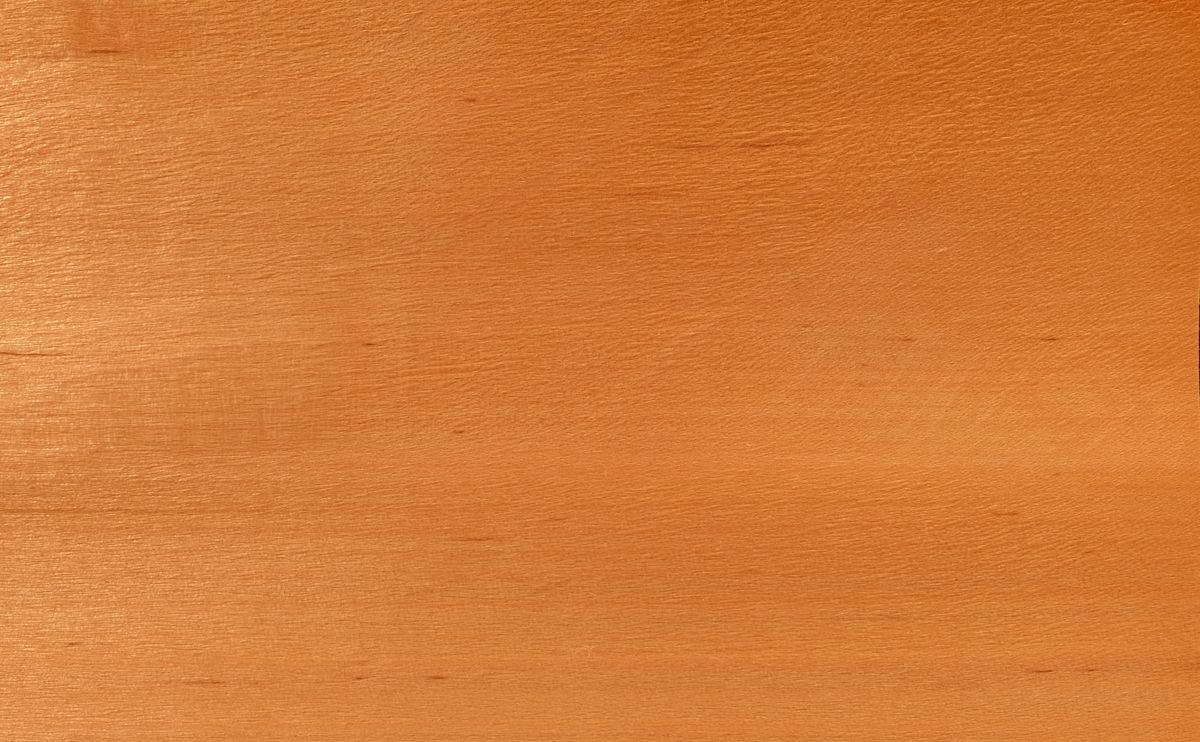
The wood is pale pinkish brown and darkens in light. Freshly cut logs show a strong orange brown on the end grain that fades. There is no true heartwood.
Grain/Texture
The wood is fine grained, with faint growth rings and little luster. The texture is even.
Rot Resistance
The wood is not durable in normal use. It is open to woodworm and has no EN 350 rating. It lasts very well when it stays under water, and old foundation piles in Amsterdam and Venice are made of alder. Both heartwood and sapwood take preservatives easily.
Workability
The wood needs little power to machine. It is soft, so tools can leave dents or rough edges, and fibers can tear around knots. Nails, screws and glue hold well. It peels and slices well for veneer, and it turns and carves well.
Odor
Not confirmed
Allergies/Toxicity
Not confirmed for this species. Health agencies treat all wood dust as a hazard, and it can irritate the nose, throat and skin. Wear a dust mask and use dust collection when you cut or sand it.
Pricing/Availability
Alder lumber is mainly used in small sizes. COFORD says Ireland imports red alder for kitchen cabinets. Supply and price tier for European alder in North America are Not confirmed.
Sustainability
IUCN rates Alnus glutinosa as Least Concern (assessed August 1, 2014, stable population). It does not appear in the CITES Appendices valid from March 5, 2026.
Common Uses
European alder makes glued panels for furniture, turned and carved furniture parts, drawer sides and hidden core parts. It also makes picture frames, moldings, toys, pencils, cigar boxes and beehives. Mills slice and peel it for veneer. It is used for foundation piles under water and for fuel.
Sources
- COFORD, Guide to Irish hardwoods, Alder (Alnus glutinosa), coford.ie
- Crni Jarci and Mala Bystrice black alder study, Turkish Journal of Agriculture and Forestry, journals.tubitak.gov.tr
- Claessens and others, A review of the characteristics of black alder, Forestry (2010), doi.org
- Informationsdienst Holz, Erlenhoelzer (German wood guide, Merkblatt 086), holzvomfach.de
- EUFORGEN, Technical guidelines for black alder (Kajba and Gracan 2003), euforgen.org
- COFORD, Common alder as a forest tree in Ireland, coford.ie
- World Flora Online, Alnus glutinosa, worldfloraonline.org
- IUCN Red List, Alnus glutinosa, iucnredlist.org
- CCOHS, Wood Dust – Health Effects (revised March 28, 2023), ccohs.ca
Photos
Veneer sheet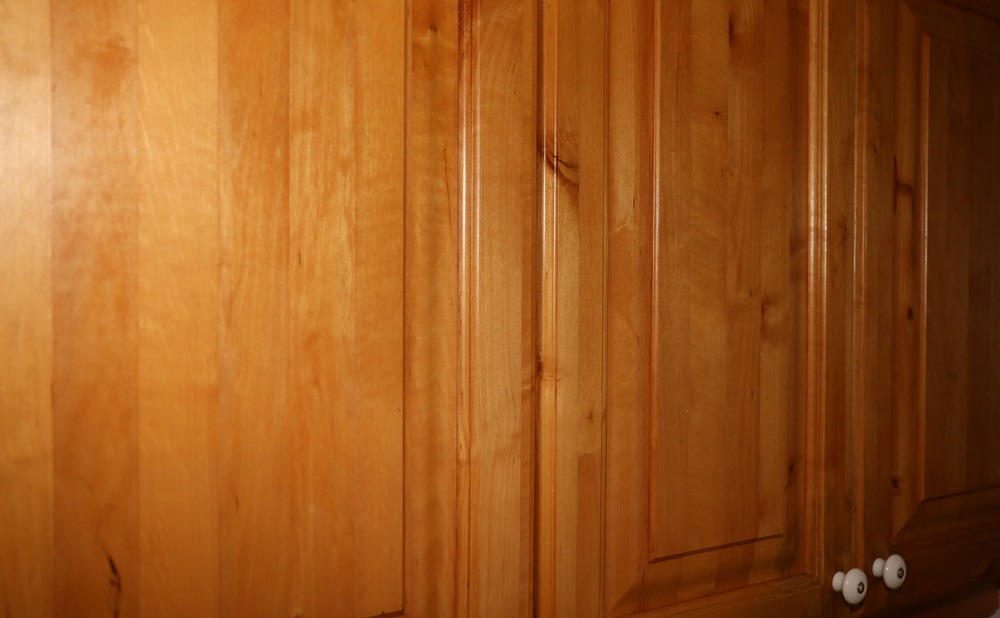 Kitchen cabinet doors
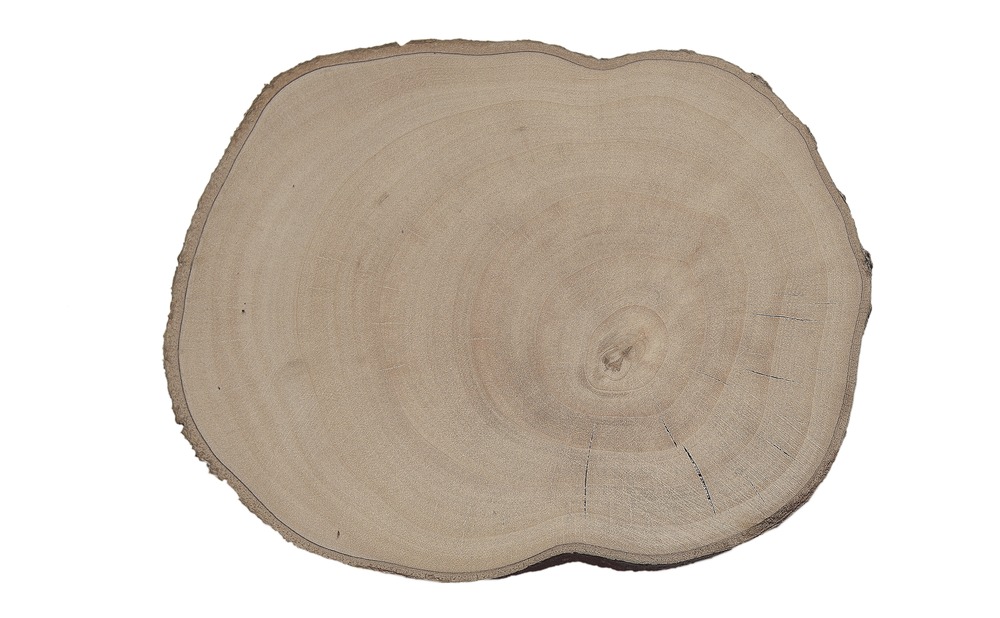 End grain, log disc