
Hardwood
Ailanthus
Ailanthus (Ailanthus altissima) is a pale yellow to yellow brown, ash-like hardwood from China, now grown worldwide, used for furniture, tool handles, turning and pulp. This guide covers its Janka hardness, weight, shrinkage, rot resistance, workability and common uses.
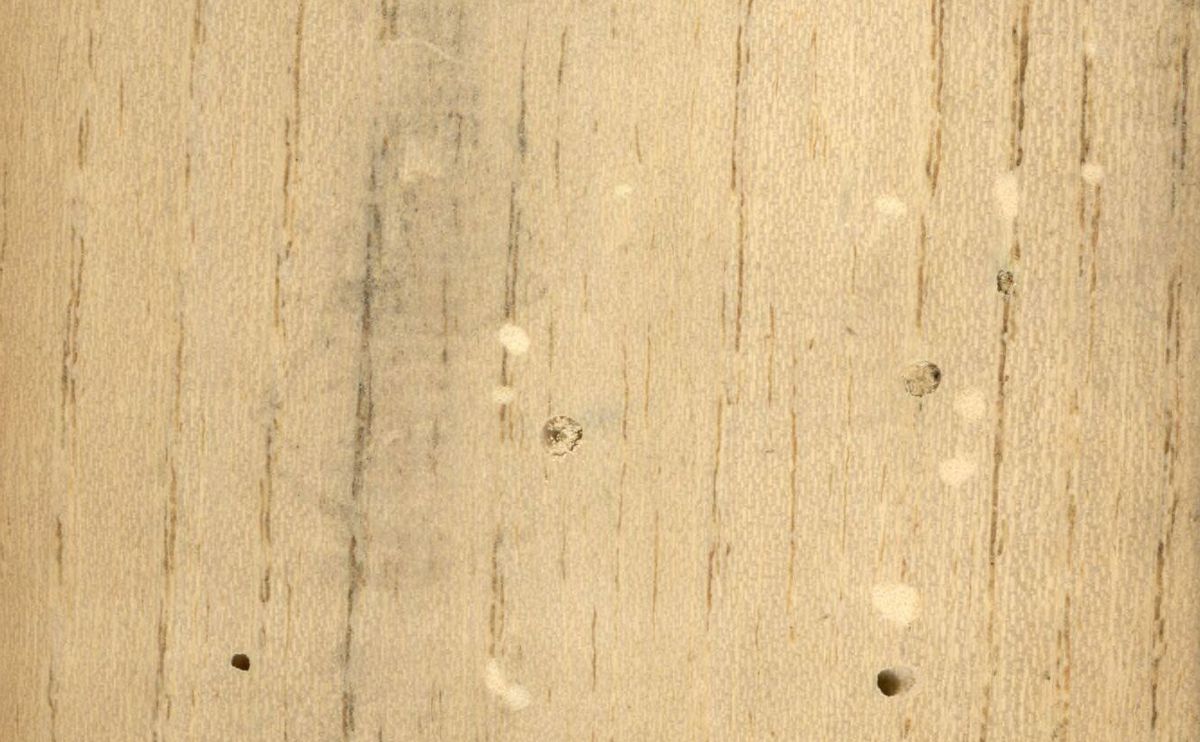
Photo: CIRAD
Specs
Wood Name
Ailanthus
Common Name(s)
Ailanthus, tree of heaven, Chinese sumac, copal tree, paradise tree, stink tree, varnish tree
Scientific Name
Ailanthus altissima (Mill.) Swingle
Wood Type
Hardwood
Distribution
Ailanthus is native to China, Taiwan and northern Vietnam. It has spread to Africa, Asia outside its home range, Europe, North America and South America. It was brought to the United States in the 19th century and now grows from the East Coast to California. It likes disturbed ground and city lots.
Tree Size
The tree grows fast, even in poor soil. HNA gives a height of 80 ft (24 m) and a trunk 2 ft (0.6 m) across. Young trees are nearly as wide as they are tall, with a spreading branch pattern.
Average Dried Weight
Not confirmed as an air-dry weight. HNA lists an oven-dry weight of 33.5 to 38.5 lbs/ft³ (537 to 617 kg/m³).Source: Hardwoods of North America (HNA)
Specific Gravity (Basic, 12% MC)
Silvics lists 0.67 for wood grown in China and 0.62 for wood grown in Virginia. Both use oven-dry weight and volume at 12% MC. HNA lists a lower value of 0.531 at 12% MC. The basic value (green volume) is Not confirmed.Source: Silvics of North America; Hardwoods of North America (HNA)
Janka Hardness
Silvics lists a side hardness of 1,030 lbf (4,600 N) for Chinese wood and 1,280 lbf (5,700 N) for Virginia wood, both dry. HNA lists a much higher 1,731 lbf (7,699 N).Source: Silvics of North America; Hardwoods of North America (HNA)
Modulus of Rupture
The dry bending strength is 11,750 psi (81.0 MPa) for Chinese wood and 14,070 psi (97.0 MPa) for Virginia wood (Silvics). HNA lists 11,800 psi (81.4 MPa).Source: Silvics of North America; Hardwoods of North America (HNA)
Elastic Modulus
The dry stiffness is 1,523,000 psi (10,500 MPa) for Chinese wood (Silvics). HNA lists 1,520,000 psi (10,480 MPa).Source: Silvics of North America; Hardwoods of North America (HNA)
Crushing Strength
HNA lists 5,260 psi (36.3 MPa) parallel to grain on dry wood. Silvics gives no crushing value.Source: Hardwoods of North America (HNA)
Shrinkage
HNA lists a volumetric shrinkage of 10.81% from green. The radial and tangential values are Not confirmed.Source: Hardwoods of North America (HNA)
Description
Color/Appearance
The sapwood is wide and white to cream. The heartwood is yellow gray to yellow brown, only slightly darker than the sapwood. HNA also notes dark streaks. The wood looks like ash.
Grain/Texture
The wood is ring porous with wide rays, like ash. The grain direction is Not confirmed.
Rot Resistance
Silvics says the wood is not resistant to decay. Termites rarely attack it. HNA also lists it as resistant to insects.
Workability
Silvics says it works, machines, glues, finishes and dries much like ash. The dense wood can split. HNA says it is easy to work with tools and glue and takes a finish well.
Odor
The dry wood has no unpleasant smell. The leaves and other living parts of the tree smell foul.
Allergies/Toxicity
Sap can cause skin rash, and Silvics cites reports of heart muscle inflammation after sap exposure. The pollen is an allergen. HNA says pruning can cause blisters. Dust effects for this wood are Not confirmed. Health agencies treat all wood dust as a hazard, and it can irritate the nose, throat and skin. Wear a dust mask and use dust collection when you cut or sand it.
Pricing/Availability
Lumber is a by-product of tree removal. Silvics says poles and trees cleared from a site can go to fuel, paper and furniture. Price tier is Not confirmed.
Sustainability
Silvics calls ailanthus a widespread invasive nonnative tree in North America (USGS Category E). It resprouts from stumps and roots after cutting. Follow local rules if you remove or use it. No IUCN rating was found.
Common Uses
Ailanthus makes furniture, tool handles, sporting goods and turned items. It is also used for crafts, paper pulp and fuel. People plant it as a shade and screen tree.
Sources
- USDA Forest Service, Silvics of North America: Ailanthus (Huebner and Wickert 2025), research.fs.usda.gov
- Hardwoods of North America, USDA Forest Products Laboratory, FPL-GTR-83 (Ailanthus altissima entry), doi.org
- CCOHS, Wood Dust – Health Effects (revised March 28, 2023), ccohs.ca
Photos
Wood sample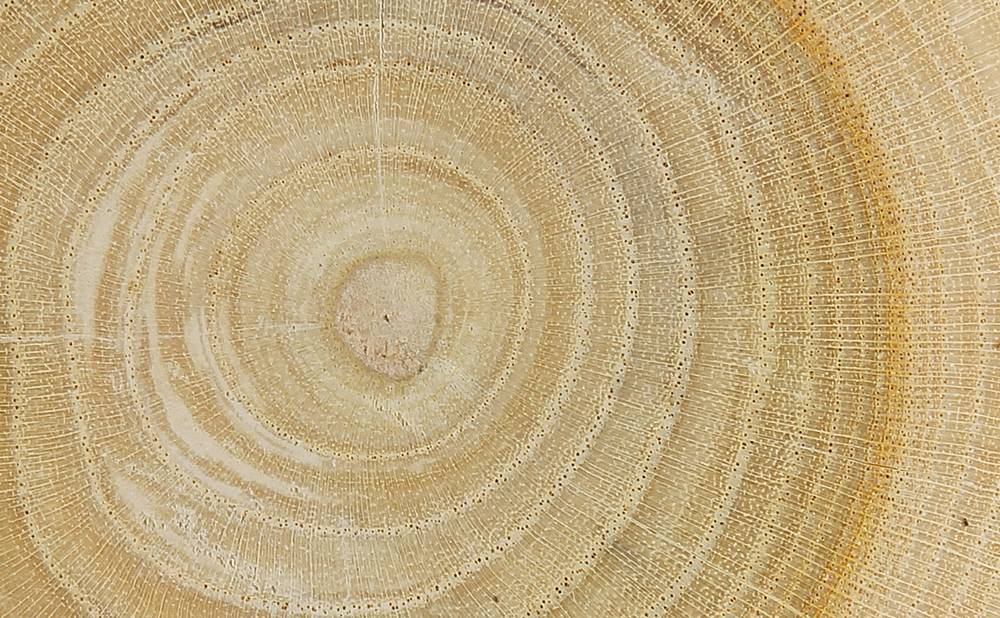 End grain, log disc