
Hardwood
Afata
Afata (Cordia trichotoma) is a light yellowish brown South American hardwood with mostly straight grain, used for furniture, doors, window frames and decorative veneer. This guide covers its Janka hardness, weight, shrinkage, rot resistance, workability and common uses.
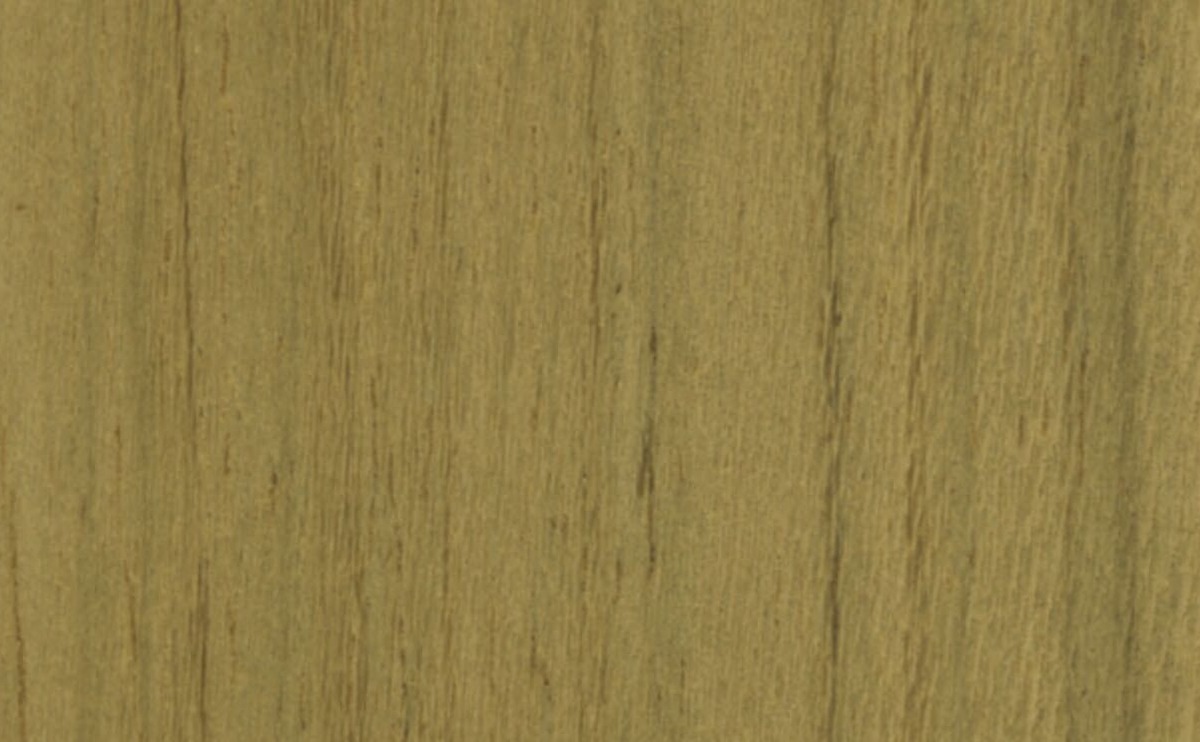
Photo: CIRAD
Specs
Wood Name
Afata
Common Name(s)
Afata, peterebi, louro pardo (Brazil), louro-do-sul, freijó, loro negro (Argentina), salmwood, Spanish elm
Scientific Name
Cordia trichotoma (Vell.) Arráb. ex Steud. It is also listed under the old names Cordiada trichotoma and Cordia hassleriana.
Wood Type
Hardwood
Distribution
Afata grows in South America. It occurs naturally in Brazil, from Ceará in the northeast south to Rio Grande do Sul. It also grows in eastern Paraguay, northeastern Argentina and Bolivia. The tree is a pioneer species of Atlantic rain forest, secondary forest and cerrado.
Tree Size
The tree is usually 26 to 66 ft (8 to 20 m) tall and 16 to 24 in (40 to 60 cm) across. Old trees can reach about 115 ft (35 m) in height and 39 in (100 cm) or more in trunk diameter. ITTO reports a tree height of 66 to 98 ft (20 to 30 m) and a trunk width of 28 to 35 in (70 to 90 cm). The trunk is straight and cylindrical.
Average Dried Weight
The air-dry weight is 37.5 lbs/ft³ (600 kg/m³) at 12% MC (ITTO). A Brazilian test lab lists 48.7 lbs/ft³ (780 kg/m³) at 15% MC.Source: ITTO, at 12% MC; REMADE / IPT (1989) at 15% MC
Specific Gravity (Basic, 12% MC)
The basic specific gravity (oven-dry weight, green volume) is 0.55 in the ITTO data and 0.65 in the Brazilian data. The value at 12% MC on an oven-dry weight basis is not confirmed. The air-dry density at 12% MC is 0.60 g/cm³ (ITTO).Source: ITTO; Embrapa / IPT for 0.65
Janka Hardness
The side hardness is 1,166 lbf (5,188 N) at 12% MC (ITTO, converted from 529 kgf).Source: ITTO, side hardness at 12% MC
Modulus of Rupture
We have not confirmed a bending strength at 12% MC. One Brazilian test lab lists 20,060 psi (138.3 MPa) at 15% MC.Source: REMADE / IPT test data (1989), at 15% MC
Elastic Modulus
The stiffness is about 1,863,000 psi (12,847 MPa) at 12% MC (ITTO, converted from 131,000 kgf/cm²).Source: ITTO, at 12% MC
Crushing Strength
The crushing strength parallel to grain is 10,070 psi (69.4 MPa) at 12% MC (ITTO). The Brazilian test lab lists 9,330 psi (64.3 MPa) at 15% MC.Source: ITTO, at 12% MC; REMADE / IPT at 15% MC
Shrinkage
Green to oven-dry, the wood shrinks 4.3% radially and 7.9% tangentially, so the tangential to radial ratio is 1.8 (ITTO). The Brazilian test lab lists 4.6% radial, 7.5% tangential and 12.9% volumetric shrinkage.Source: ITTO, green to oven-dry; REMADE / IPT for the second set
Description
Color/Appearance
The heartwood is a light yellowish brown or beige gray. It can be uniform or carry faint, darker stripes. The sapwood is yellowish brown and clearly set apart from the heartwood. The surface looks lustrous and feels slightly rough.
Grain/Texture
The grain is straight or shallowly interlocked. ITTO calls the texture fairly fine. The Brazilian sources call it coarse.
Rot Resistance
The heartwood has moderate resistance to decay. ITTO rates it 3 on a scale where 1 is the best and 7 is the worst, and it resists dry-wood termites well. The Brazilian sources rate its resistance to wood-destroying organisms as low. The heartwood is hard to treat with preservatives.
Workability
Afata is easy to work with hand and machine tools. It saws and planes easily, holds nails well, glues well and polishes easily. It dulls cutting edges only slightly. Drying is difficult, and the boards can crack on the surface and at the ends. The wood bends well with steam.
Odor
Afata has a mild, pleasant smell.
Allergies/Toxicity
We have not found a published source on the health effects of afata wood. Health agencies treat all wood dust as a hazard. The International Agency for Research on Cancer (IARC) classes wood dust as carcinogenic to humans, with links to cancers of the nose and sinuses. Wear a dust mask and use dust collection when you cut or sand it.
Pricing/Availability
Afata is a South American hardwood sold in Brazil as louro pardo and in Paraguay and Argentina as peterebi. The IUCN says its timber is traded nationally and internationally. We have not confirmed its supply or price tier in North America.
Sustainability
The IUCN Red List rates Cordia trichotoma as Least Concern (assessed June 12, 2018, population stable). It has a very wide range and a large population, and the IUCN says logging is not a major threat at present. It is not listed in the CITES Appendices. A 2002 Brazilian source says stands near Cáceres in Mato Grosso are vanishing fast because trees are cut without replacement.
Common Uses
Afata is used for furniture, doors, window frames, paneling and decorative veneer. Makers also use it for plywood, turned items, carving, bent parts, boats and barrels.
Sources
- ITTO Tropical Timber lesser used species database, Peterebi (Cordia trichotoma), tropicaltimber.info
- Embrapa Florestas, Carvalho, P.E.R. 2002. Louro Pardo. Circular Técnica 66, infoteca.cnptia.embrapa.br
- REMADE, Louro-Pardo wood sheet (Brazilian IPT test data, 1989), remade.com.br
- Floresta e Ambiente, Louro-pardo Cordia trichotoma, uma espécie promissora (1997), scielo.br
- IUCN Red List, Cordia trichotoma, iucnredlist.org
- CITES Appendices I, II and III (valid from March 5, 2026), cites.org
- CCOHS, Wood Dust: Health Effects (revised 2023-03-28), ccohs.ca
Photos
Wood sample