
Hardwood
Afrormosia
Afrormosia (Pericopsis elata) is a yellow-brown West and Central African hardwood with a fairly fine texture, prized for furniture, veneer, flooring and joinery. This guide covers its Janka hardness, weight, shrinkage, rot resistance, workability and common uses.
Photo: CIRAD
Specs
Wood Name
Afrormosia
Common Name(s)
Afrormosia, kokrodua (Ghana), assamela (Côte d’Ivoire), obang (Cameroon), bohala (DR Congo), African teak
Scientific Name
Pericopsis elata (Harms) Meeuwen. The old name is Afrormosia elata.
Wood Type
Hardwood
Distribution
Afrormosia grows in West and Central Africa. PROTA says it occurs from Côte d’Ivoire east to the Central African Republic and DR Congo. The IUCN lists Cameroon, the Central African Republic, Congo, DR Congo, Côte d’Ivoire, Ghana and Nigeria. The tree grows in both wet and dry forest, and it was planted in western Uganda. Ghana and Côte d’Ivoire were its main sources in the past.
Tree Size
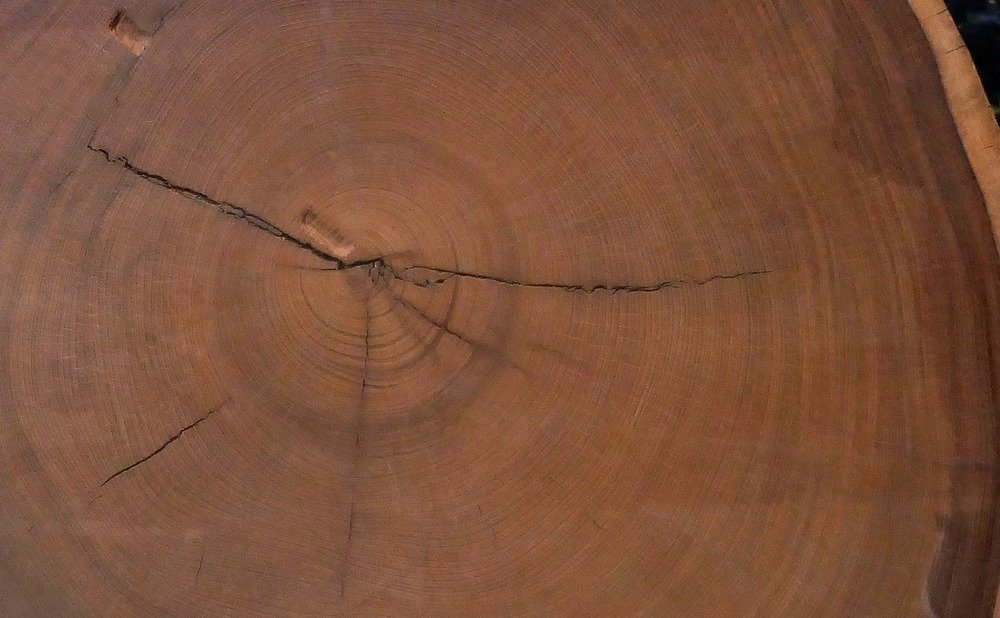
The tree grows up to about 150 ft (45 m) tall. The clear trunk is 90 to 100 ft (27 to 30 m) long and about 3 to 6 ft (90 to 180 cm) across. The base has low, blunt buttresses, and the trunk above them is often fluted.
Average Dried Weight
The air-dry weight is 43 lbs/ft³ (689 kg/m³) in the USDA data. Other sources list 43.7 to 49.9 lbs/ft³ (700 to 800 kg/m³) at 12% MC.Source: USDA Tropical Timbers of the World (AH-607); CIRAD, ITTO and PROTA for the range
Specific Gravity (Basic, 12% MC)
The basic specific gravity (oven-dry weight, green volume) is 0.57 in the USDA data and 0.66 in the ITTO data. The value at 12% MC on an oven-dry weight basis is not confirmed. The air-dry density at 12% MC is 0.74 g/cm³ (CIRAD and ITTO).Source: USDA Tropical Timbers of the World (AH-607); ITTO and CIRAD
Janka Hardness
The side hardness is 1,560 lbf (6,940 N) on dry wood. ITTO lists 1,488 lbf (6,619 N).Source: USDA Tropical Timbers of the World (AH-607), dry side hardness; ITTO
Modulus of Rupture
The bending strength is 19,410 psi (133.8 MPa) at 12% MC in the USDA data. CIRAD and ITTO both list about 13,490 psi (93 MPa).Source: USDA Tropical Timbers of the World (AH-607), at 12% MC; CIRAD and ITTO
Elastic Modulus
The stiffness is 1,810,000 psi (12,480 MPa) at 12% MC in the USDA data. Other sources range from 1,371,000 to 1,929,000 psi (9,450 to 13,300 MPa).Source: USDA Tropical Timbers of the World (AH-607), at 12% MC; PROTA for the range
Crushing Strength
The crushing strength parallel to grain is 10,360 psi (71.4 MPa) at 12% MC in the USDA data. CIRAD and ITTO list about 9,280 psi (64 MPa).Source: USDA Tropical Timbers of the World (AH-607), at 12% MC; CIRAD and ITTO
Shrinkage
Green to oven-dry, the wood shrinks 3.0% radially, 6.4% tangentially and 10.7% by volume, so the tangential to radial ratio is about 2.1 (USDA). CIRAD lists 3.2% radial and 5.9% tangential. The wood moves very little in use.Source: USDA Tropical Timbers of the World (AH-607), green to oven-dry; CIRAD
Description
Color/Appearance
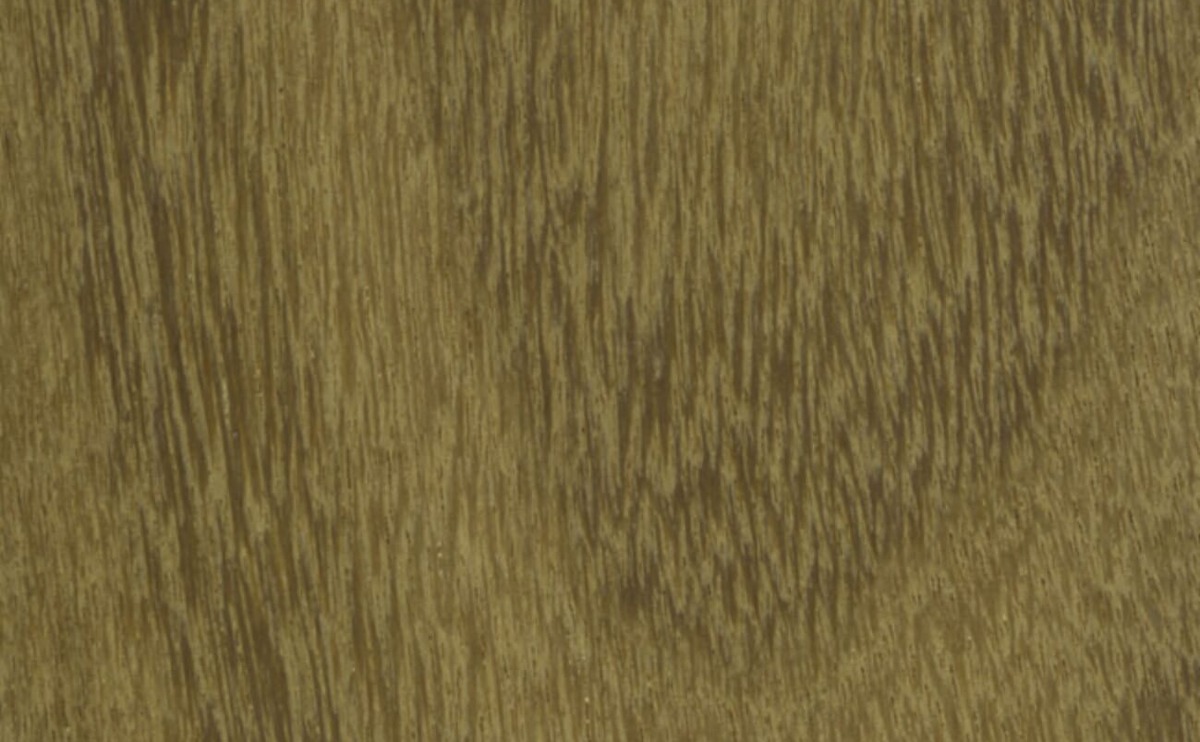
The heartwood is yellow brown with darker veins, and it darkens to a deeper brown as it ages. The narrow sapwood is paler and clearly set apart. Quartersawn faces look mottled. The wood looks like teak, but it does not feel oily.
Grain/Texture
The grain is straight to slightly interlocked. The texture is fine to moderately fine, and the luster is low.
Rot Resistance
The heartwood is very durable to durable. CIRAD rates it class 1 to 2 on the European EN 350 scale, where class 1 is the best. It also resists termites and dry-wood borers. Marine borers can attack it sometimes. The wood stains dark where it touches iron in damp conditions.
Workability
Afrormosia works well with hand and machine tools, but it dulls cutters fairly quickly, so use carbide cutters and stellite-tipped saw teeth. Interlocked grain can tear slightly when planed. Drill pilot holes before you nail or screw it. Glue it with care because the glue can stain it. It turns and slices well and bends moderately with steam. It dries slowly with little distortion.
Odor
ITTO describes a light, pleasant smell.
Allergies/Toxicity
Afrormosia dust can irritate the nose, throat and eyes. Use good ventilation. Health agencies treat all wood dust as a hazard. The International Agency for Research on Cancer (IARC) classes wood dust as carcinogenic to humans, with links to cancers of the nose and sinuses. Wear a dust mask and use dust collection when you cut or sand it.
Pricing/Availability
Afrormosia is a premium African hardwood that buyers have long used as a teak substitute. International trade is controlled under CITES, so shipments need permits. PROTA says Ghana’s exports have fallen sharply since the 1960s. We have not confirmed its supply or price tier in North America.
Sustainability
Pericopsis elata is listed in CITES Appendix II. The listing covers logs, sawn wood, veneer sheets, plywood and transformed wood (annotation #17 in the Appendices valid from March 5, 2026). The exporting country must issue a CITES permit for these goods. Check your own country’s import rules before you buy. The IUCN Red List rates the species Endangered (criteria A2cd, assessed January 23, 2020, population decreasing). It names logging, crop farming and mining as threats.
Common Uses
Afrormosia is used for furniture, decorative veneer, flooring, decking, stairs and interior and exterior joinery. Builders also use it for boat planking and decks, paneling and turned items.
Sources
- Chudnoff, M. 1984. Tropical Timbers of the World, USDA Agriculture Handbook 607 (Pericopsis elata), research.fs.usda.gov
- CIRAD Tropix, Afrormosia technical sheet (2026 edition), tropix.cirad.fr
- ITTO Tropical Timber lesser used species database, Afrormosia-Assamela (Pericopsis elata), tropicaltimber.info
- PROTA, Pericopsis elata (Anglaaere 2008), plantuse.plantnet.org
- IUCN Red List, Pericopsis elata, iucnredlist.org
- CITES Appendices I, II and III (valid from March 5, 2026), cites.org
- CCOHS, Wood Dust: Health Effects (revised 2023-03-28), ccohs.ca
Photos
Wood sample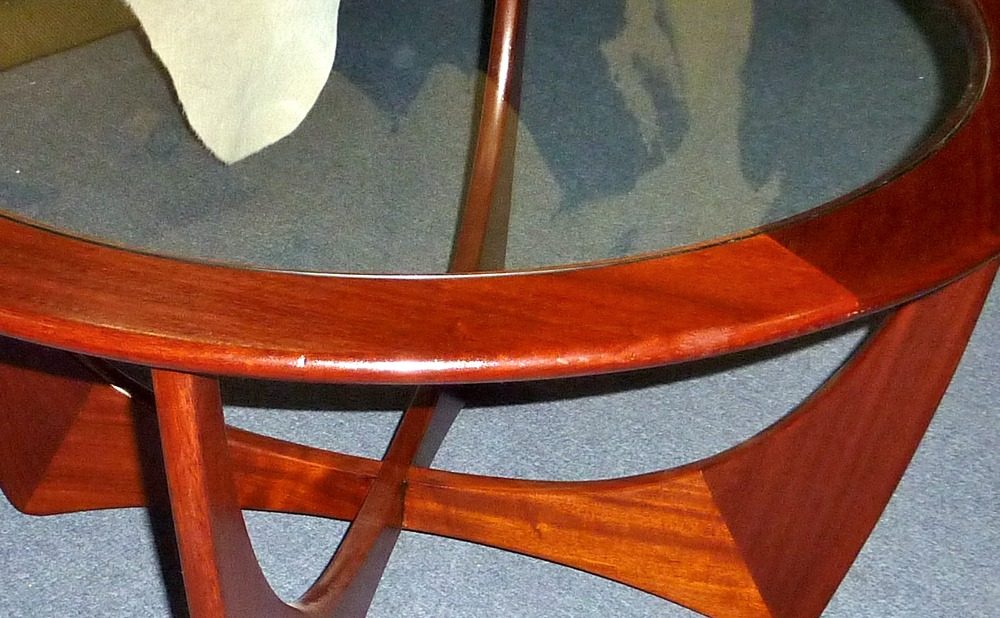 Coffee table
 End grain, trunk section