
Hardwood
Andiroba
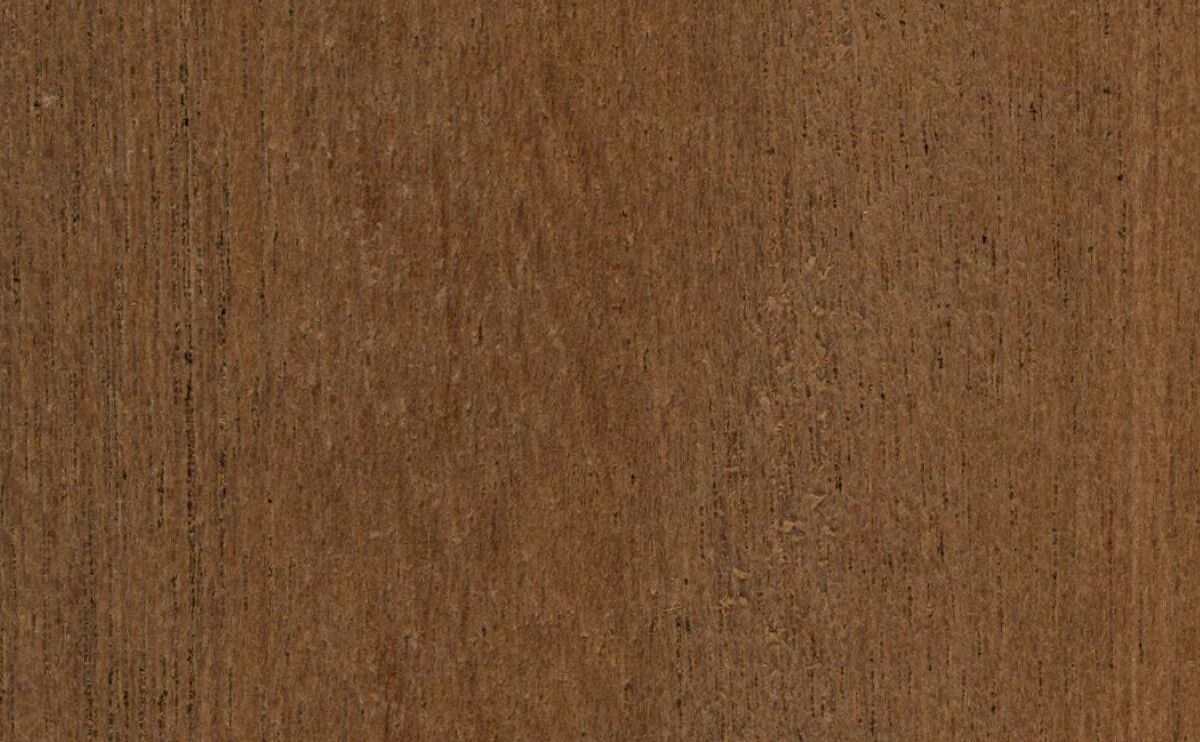
Andiroba (Carapa guianensis) is a medium to dark reddish brown, medium-textured hardwood from tropical America, used as a mahogany substitute for furniture, flooring, joinery and veneer. This guide covers its Janka hardness, weight, shrinkage, rot resistance, workability and common uses.
Photo: CIRAD
Specs
Wood Name
Andiroba
Common Name(s)
Andiroba, crabwood (Guyana), carapa, cedro macho, tangare
Scientific Name
Carapa guianensis Aubl.
Wood Type
Hardwood
Distribution
Andiroba grows from Belize through Central America to the Brazilian Amazon, and in the Caribbean. IUCN says it is common and locally very abundant. It favors wet lowland forest along rivers and swamps, but it also grows on higher ground and low hills, up to 4,590 ft (1,400 m).
Tree Size
IUCN says the tree grows up to 197 ft (60 m) tall. CIRAD lists log diameters of 20 to 31 in (50 to 80 cm) and a sapwood band 1.2 to 2.0 in (3 to 5 cm) wide.
Average Dried Weight
The Wood Handbook gives specific gravity only. CIRAD lists a density of 41.8 lbs/ft³ (670 kg/m³) at 12% MC. The Wood Database lists 41.2 lbs/ft³ (660 kg/m³).Source: CIRAD; The Wood Database; USDA Wood Handbook
Specific Gravity (Basic, 12% MC)
The Wood Handbook lists 0.54 basic (oven-dry weight, green volume). CIRAD lists 0.67 at 12% MC.Source: CIRAD; USDA Wood Handbook
Janka Hardness
The Wood Handbook lists a side hardness of 1,130 lbf (5,000 N) at 12% MC. Green wood measures 880 lbf (3,900 N). The Wood Database lists a higher 1,220 lbf (5,430 N).Source: The Wood Database; USDA Wood Handbook
Modulus of Rupture
The Wood Handbook lists 15,500 psi (106.9 MPa) at 12% MC. Green wood measures 10,300 psi (71.0 MPa). CIRAD lists a lower 14,790 psi (102 MPa).Source: CIRAD; USDA Wood Handbook
Elastic Modulus
The Wood Handbook lists 2,000,000 psi (13,800 MPa) at 12% MC. Green wood measures 1,690,000 psi (11,700 MPa). CIRAD lists 2,107,000 psi (14,530 MPa).Source: CIRAD; USDA Wood Handbook
Crushing Strength
The crushing strength parallel to grain is 8,120 psi (56.0 MPa) at 12% MC in the Wood Handbook. Green wood measures 4,780 psi (33.0 MPa). CIRAD lists 8,560 psi (59 MPa).Source: CIRAD; USDA Wood Handbook
Shrinkage
Green to oven-dry, the Wood Handbook lists 3.1% radial, 7.6% tangential and 10.4% by volume. CIRAD lists 4.8% radial and 7.7% tangential, a ratio of 1.6. The Wood Handbook figures work out to a ratio of 2.5.Source: CIRAD; USDA Wood Handbook
Description
Color/Appearance
The heartwood runs from medium to dark reddish brown, and CIRAD uses red brown as its reference color. The sapwood does not stand out clearly from the heartwood. Quartersawn faces can show a ribbon figure.
Grain/Texture
The Wood Handbook says the texture resembles true mahogany. It calls the grain usually interlocked. CIRAD describes a medium texture, with grain that is straight or slightly interlocked.
Rot Resistance
Sources disagree. The Wood Handbook table ranks the heartwood moderately resistant to decay, while its species notes say durable to very durable. CIRAD says moderately to poorly durable, with wood borers a risk throughout and a moderate termite rating.
Workability
The Wood Handbook calls andiroba easy to work, paint and glue. CIRAD reports a normal blunting effect on ordinary tools. Interlocked grain can make planing hard, and the wood tends to split when nailed, so pre-bore. Drying is normal to slow with a high risk of checking.
Odor
Not confirmed. The Wood Database reports no characteristic odor.
Allergies/Toxicity
The Wood Database says andiroba has been reported to cause eye and skin irritation and sneezing. Health agencies treat all wood dust as a hazard, and it can irritate the nose, throat and skin. Wear a dust mask and use dust collection when you cut or sand it.
Pricing/Availability
IUCN says andiroba serves as a market substitute for mahogany, and certified timber is available. The Wood Database says it is less common in North America than mainstream hardwoods. Price tier is Not confirmed.
Sustainability
IUCN rates Carapa guianensis as Least Concern (assessed February 24, 2017). Timber and seed-oil harvests are the main pressure. CIRAD says the species is not in the CITES Appendices (2025 list), and it does not appear in the March 5, 2026 text.
Common Uses
The Wood Handbook lists flooring, frame construction in the tropics, furniture, cabinetwork, millwork, decorative veneer and plywood. IUCN adds general construction and shipbuilding.
Sources
- Wood Handbook, USDA Forest Products Laboratory (FPL-GTR-282, Tables 5-5a and 5-5b strength, andiroba), research.fs.usda.gov. Chapter 4 Table 4-4 (shrinkage), research.fs.usda.gov. Chapter 14 Table 14-1 (decay), research.fs.usda.gov. Chapter 2 (species notes), research.fs.usda.gov
- CIRAD Tropix, Andiroba technical sheet (2026 edition, English), tropix.cirad.fr
- IUCN Red List, Carapa guianensis (Rivers, Barstow and Mark 2017), iucnredlist.org
- The Wood Database, andiroba page (secondary reference, used for cross-checks and gaps), wood-database.com
- CITES Appendices I, II and III valid from March 5, 2026, cites.org
- CCOHS, Wood Dust – Health Effects (revised March 28, 2023), ccohs.ca
Photos
Wood sample