
Hardwood
Angelim Vermelho
Angelim vermelho (Dinizia excelsa) is a dense, reddish brown, medium-textured hardwood from the Amazon region, used for heavy construction, bridges, decking, sleepers and flooring. This guide covers its Janka hardness, weight, shrinkage, rot resistance, workability and common uses.
Photo: CIRAD
Specs
Wood Name
Angelim Vermelho
Common Name(s)
Angelim vermelho, angelim pedra, angelim ferro, angelim falso, faveira grande, faveira preta, parakwa (Guyana)
Scientific Name
Dinizia excelsa Ducke
Wood Type
Hardwood
Distribution
Angelim vermelho grows in non-flooded Amazon forest in Brazil, Guyana and Suriname. In Brazil it ranges across Acre, Amapá, Amazonas, Mato Grosso, Pará, Rondônia, Roraima and Tocantins. IUCN records it from 164 to 1,610 ft (50 to 490 m) elevation.
Tree Size
IUCN describes a canopy emergent tree up to 197 ft (60 m) tall. CIRAD lists log diameters of 26 to 47 in (65 to 120 cm) and a sapwood band 2 to 4 in (5 to 10 cm) wide. CIRAD adds that hollow trees are very common.
Average Dried Weight
CIRAD lists 66.8 lbs/ft³ (1,070 kg/m³) at 12% MC. The Wood Database lists the same, 67 lbs/ft³ (1,070 kg/m³).Source: CIRAD; The Wood Database
Specific Gravity (Basic, 12% MC)
CIRAD lists 1.07 at 12% MC. The Wood Database lists 0.79 basic (oven-dry weight, green volume) and 1.07 at 12% MC.Source: CIRAD; The Wood Database
Janka Hardness
The Wood Database lists 3,160 lbf (14,050 N) at 12% MC. No second source confirms this Janka figure. CIRAD uses a different test, a Monnin hardness of 17.1.Source: CIRAD; The Wood Database
Modulus of Rupture
CIRAD lists 23,210 psi (160 MPa) at 12% MC. The Wood Database lists 22,630 psi (156 MPa).Source: CIRAD; The Wood Database
Elastic Modulus
The sources disagree. CIRAD lists 3,812,000 psi (26,280 MPa) at 12% MC, while The Wood Database lists 2,811,000 psi (19,390 MPa). The true value is Not confirmed.Source: CIRAD; The Wood Database
Crushing Strength
CIRAD lists 12,910 psi (89 MPa) parallel to grain at 12% MC. The Wood Database lists 12,460 psi (85.9 MPa).Source: CIRAD; The Wood Database
Shrinkage
Green to oven-dry, CIRAD lists 5.1% radial and 8.5% tangential, a ratio of 1.7. The Wood Database lists 5.4% radial, 8.8% tangential, 14.3% by volume and a ratio of 1.6.Source: CIRAD; The Wood Database
Description
Color/Appearance
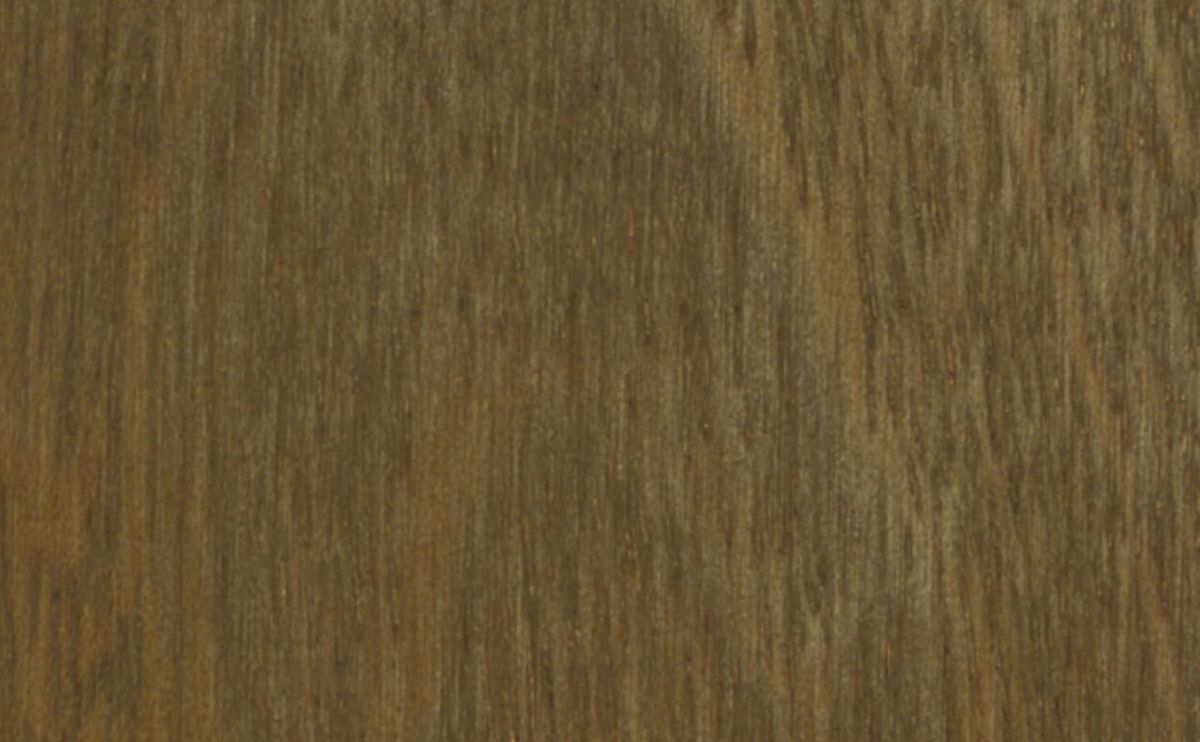
The heartwood is reddish brown, sometimes with colored streaks. Fresh cuts can look olive and then darken to a deeper reddish brown. CIRAD calls the 2 to 4 in (5 to 10 cm) sapwood clearly set apart, while The Wood Database says the line is not always clear.
Grain/Texture
CIRAD lists a medium texture with straight or slightly interlocked grain. The Wood Database says the grain is usually interlocked and the texture medium to coarse, with a moderate luster.
Rot Resistance
CIRAD gives the heartwood a very durable (class 1) rating against fungi, and a durable rating against dry-wood borers and termites. It resists preservatives poorly. CIRAD says the density and hardness let it serve in ground contact, fresh water and even salt water.
Workability
The wood is hard to work. CIRAD reports a fairly high blunting effect, so use stellite-tipped saw teeth and tungsten carbide cutters, and expect to need power. Pre-bore for nails and screws. Dry it slowly, air drying first, because collapse is possible.
Odor
CIRAD notes an unpleasant odor when the wood is green or rewetted. The Wood Database says the smell is pungent when the wood is worked.
Allergies/Toxicity
The Wood Database says angelim vermelho has been reported to cause unspecified allergic reactions. Health agencies treat all wood dust as a hazard, and it can irritate the nose, throat and skin. Wear a dust mask and use dust collection when you cut or sand it.
Pricing/Availability
IUCN says this is one of the major species harvested and traded in Brazil. The Wood Database says it is not commonly offered in North America, and sometimes appears as decking. Price tier is Not confirmed.
Sustainability
IUCN rates Dinizia excelsa as Least Concern (assessed March 27, 2017). It says the population is probably declining from habitat loss and logging. CIRAD lists it as absent from the CITES Appendices (2025 list), and the March 5, 2026 text also omits it.
Common Uses
CIRAD lists bridges, heavy carpentry, stairs, industrial flooring, poles, ship planking and decks, railway sleepers and vehicle flooring. IUCN adds joinery, door and window frames, beams and posts.
Sources
- CIRAD Tropix, Angelim vermelho technical sheet (2026 edition, English), tropix.cirad.fr
- IUCN Red List, Dinizia excelsa (Canteiro and Lewis 2019, assessed 2017), iucnredlist.org
- The Wood Database, angelim-vermelho page (secondary reference, used for cross-checks and gaps), wood-database.com
- CITES Appendices I, II and III valid from March 5, 2026, cites.org
- CCOHS, Wood Dust – Health Effects (revised March 28, 2023), ccohs.ca
Photos
Wood sample