
Softwood
Atlantic White Cedar
Atlantic white cedar (Chamaecyparis thyoides) is a light, decay-resistant softwood of eastern U.S. coastal swamps, used for boats, shingles, siding and other outdoor work. This guide covers its Janka hardness, weight, shrinkage, rot resistance, workability and common uses.
Specs
Wood Name
Atlantic White Cedar
Common Name(s)
Atlantic white cedar, southern white cedar, white-cedar, swamp-cedar, boat-cedar
Scientific Name
Chamaecyparis thyoides (L.) Britton, Sterns & Poggenb. The tree is not a true cedar (genus Cedrus) and belongs to the cypress family, Cupressaceae.
Wood Type
Softwood
Distribution
Atlantic white cedar is a swamp tree of the Atlantic and Gulf coastal plains, in a narrow coastal belt from southern Maine to northern Florida and west to southern Mississippi. Some accounts extend the Gulf Coast range to Louisiana.
Tree Size
Trees are often listed at 65 to 100 ft (20 to 30 m) tall with a trunk 12 to 24 in (0.3 to 0.6 m) across. Other accounts call the trees relatively small and give no typical mature height or diameter.
Average Dried Weight
Average dried weight is 24 lbs/ft³ (380 kg/m³) at 12% MC. The wood is also called lightweight.
Specific Gravity (Basic, 12% MC)
Specific gravity is 0.31 basic (oven-dry weight, green volume). At 12% MC, published values are 0.32 and 0.38.
Janka Hardness
Side hardness is 350 lbf (1,560 N) at 12% MC.
Modulus of Rupture
Modulus of rupture is 6,800 psi (46.9 MPa) at 12% MC.
Elastic Modulus
Elastic modulus is 930,000 psi (6,410 MPa) at 12% MC.
Crushing Strength
Crushing strength is 4,700 psi (32.4 MPa) parallel to grain at 12% MC.
Shrinkage
Green to oven-dry, shrinkage is 2.9% radial, 5.4% tangential and 8.8% by volume. The tangential to radial ratio works out to 1.9. The wood also shrinks little in drying.
Description
Color/Appearance
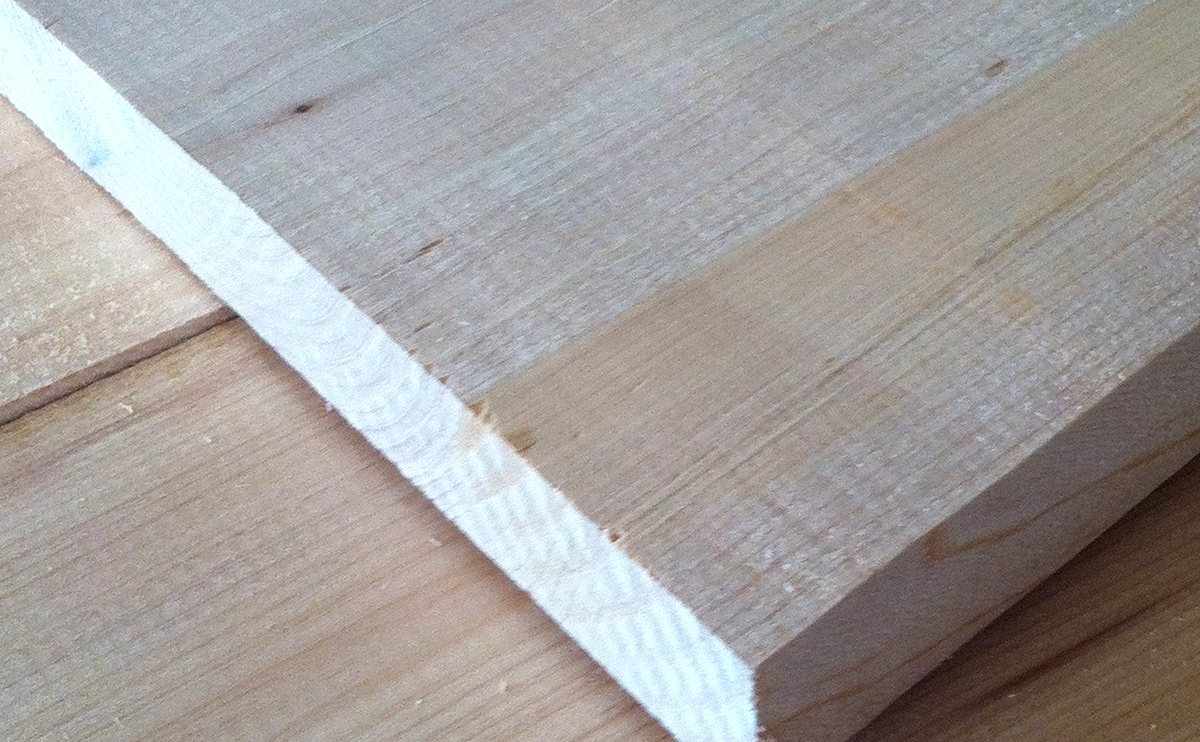
Some boards show light brown heartwood, with white or nearly white, usually narrow sapwood. Others are described as light reddish brown, with a narrow pale yellow-brown to almost white sapwood that is clearly separated from the heartwood.
Grain/Texture
The grain is straight, with a fine, uniform texture.
Rot Resistance
Atlantic white-cedar is placed in the “resistant” group, and the heartwood is also described as highly resistant to decay, or as durable to very durable.
Workability
The wood is easily worked, holds paint well, and shrinks or warps little in seasoning. It works easily with hand and machine tools and stains, glues and finishes well.
Odor
It has a characteristic cedar-like scent.
Allergies/Toxicity
Serious reactions are rare, though skin irritation has been reported with Atlantic white cedar. Health agencies treat all wood dust as a hazard, and it can irritate the nose, throat and skin. Wear a dust mask and use dust collection when you cut or sand it.
Pricing/Availability
Because the range is limited and the trees are relatively small, medium to high prices are expected for a domestic softwood. Heavy cutting has reduced even the largest stands. Prices are not quoted here.
Sustainability
Chamaecyparis thyoides is listed as Least Concern (assessed September 13, 2012; published 2013, marked as needing an update). The assessment gives no criteria code and lists the population trend as increasing.
Common Uses
The wood was used for shingles, barrels, tanks and small boats, and is still used where durability, light weight and weather resistance matter: telephone poles, piling, ties, siding, boat railing and similar work. Other uses include boatbuilding, carving and construction lumber.
Sources
- IUCN Red List, Chamaecyparis thyoides (assessed 2012, published 2013), iucnredlist.org
- USDA Forest Service, Silvics of North America, Volume 1, Conifers (Agriculture Handbook 654), Chamaecyparis thyoides (Little and Garrett, 1990), research.fs.usda.gov
- USDA Forest Service, Wood Handbook (FPL-GTR-282), chapter 5, Tables 5-3a and 5-3b (strength of U.S. softwoods), research.fs.usda.gov
- USDA Forest Service, Wood Handbook (FPL-GTR-282), chapter 4, Table 4-3a (shrinkage), research.fs.usda.gov
- USDA Forest Service, Wood Handbook (FPL-GTR-282), chapter 14, Table 14-1 (decay resistance groups), research.fs.usda.gov
- USDA Forest Service, Wood Handbook (FPL-GTR-282), chapter 2 (species notes), research.fs.usda.gov
- The Wood Database, atlantic-white-cedar page (secondary reference, used for cross-checks and gaps), wood-database.com
- CITES Appendices I, II and III valid from March 5, 2026, cites.org
- CITES Checklist search, Chamaecyparis thyoides (no listing returned; the Appendices above are the legal text), checklist.cites.org
- BfN CITES tree list, March 5, 2026 (pointer only; the Appendices above are the legal text), bfn.de
- CCOHS, Wood Dust – Health Effects (revised March 28, 2023), ccohs.ca
- Photo: Cedar Specialties, cedarspecialties.com
- Photo: Coastal Forest Products, coastalforestproducts.com
- Photo: Famartin, Wikimedia Commons, CC BY-SA 4.0, commons.wikimedia.org License, creativecommons.org
Photos
Banner, board corner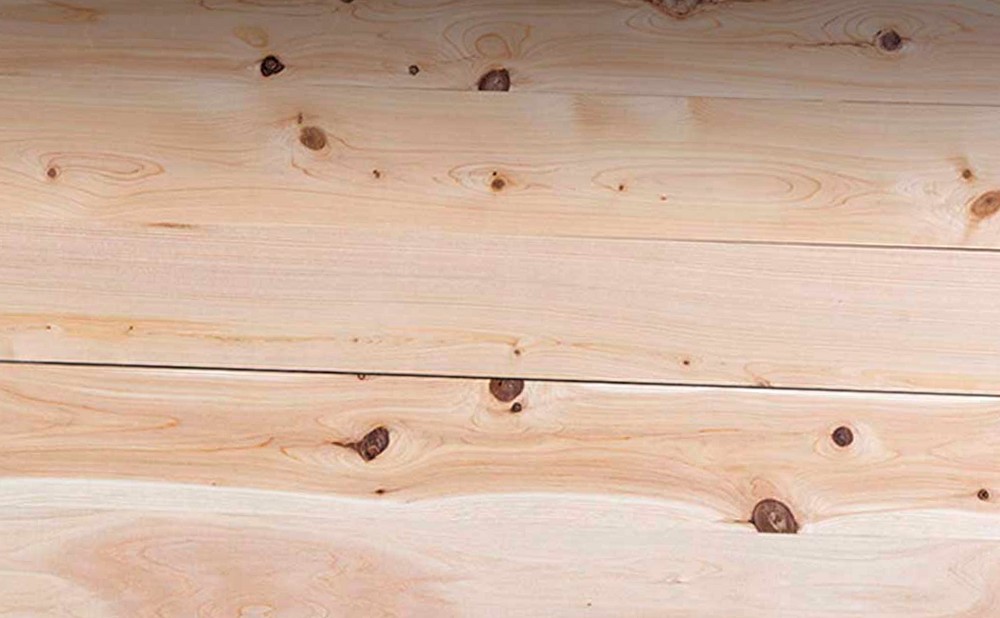 Boards with knots
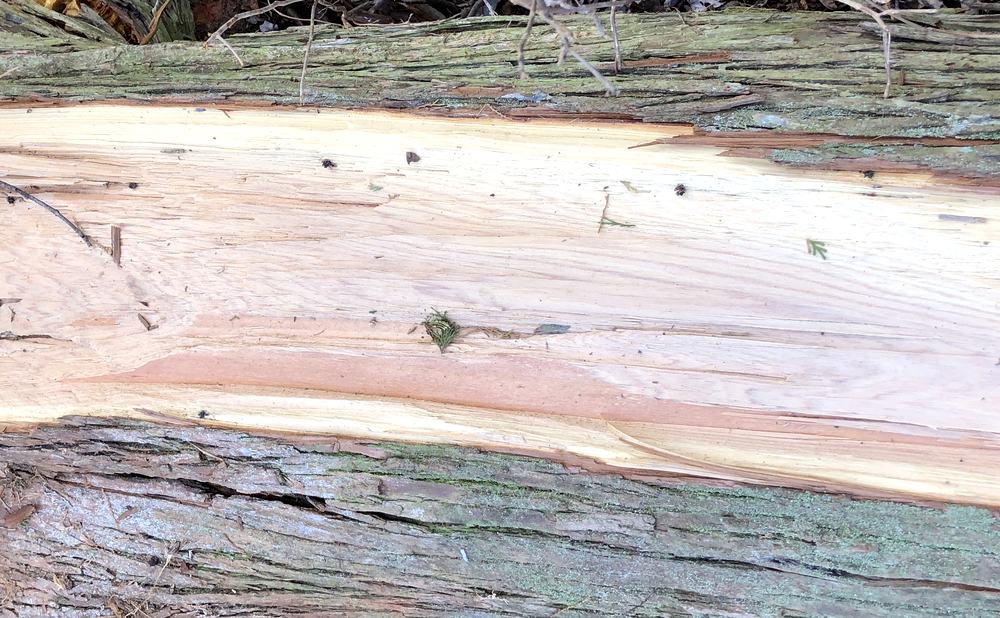 Heartwood, split trunk