
Hardwood
Black Walnut
Black walnut (Juglans nigra) is a dark brown, mostly straight-grained North American hardwood prized for fine furniture, cabinets and veneer. This guide covers its Janka hardness, weight, shrinkage, rot resistance, workability and common uses.
Photo: Friedrich Böhringer
Specs
Wood Name
Black Walnut
Common Name(s)
Black walnut, eastern black walnut, American walnut
Scientific Name
Juglans nigra
Wood Type
Hardwood
Distribution
Central and eastern United States. The natural range runs from western Vermont and Massachusetts west through New York to southern Ontario, central Michigan, southern Minnesota, eastern South Dakota and northeastern Nebraska. It reaches south to western Oklahoma and central Texas, and east to northwestern Florida and Georgia. It does not grow in the Mississippi River Valley and Delta.
Tree Size
100 to 120 ft (30 to 37 m) tall, 30 to 40 in (76 to 102 cm) trunk diameter
Average Dried Weight
38 lbs/ft³ (609 kg/m³)Source: USDA Hardwoods of North America (FPL-GTR-83), at 12% MC
Specific Gravity (Basic, 12% MC)
Basic: 0.51 (oven-dry weight, green volume), 12% MC: 0.55 (oven-dry weight, volume at 12% MC)Source: USDA Wood Handbook (FPL-GTR-190)
Janka Hardness
1,010 lbf (4,490 N)Source: USDA Wood Handbook (FPL-GTR-190), side hardness at 12% MC
Modulus of Rupture
14,600 lbf/in² (100.7 MPa)Source: USDA Wood Handbook (FPL-GTR-190), at 12% MC
Elastic Modulus
1,680,000 lbf/in² (11.58 GPa)Source: USDA Wood Handbook (FPL-GTR-190), at 12% MC
Crushing Strength
7,580 lbf/in² (52.3 MPa)Source: USDA Wood Handbook (FPL-GTR-190), parallel to grain, at 12% MC
Shrinkage
Radial: 5.5%, Tangential: 7.8%, Volumetric: 12.8%, T/R ratio: about 1.4Source: USDA Wood Handbook (FPL-GTR-190), green to oven-dry, as a share of green size
Description
Color/Appearance
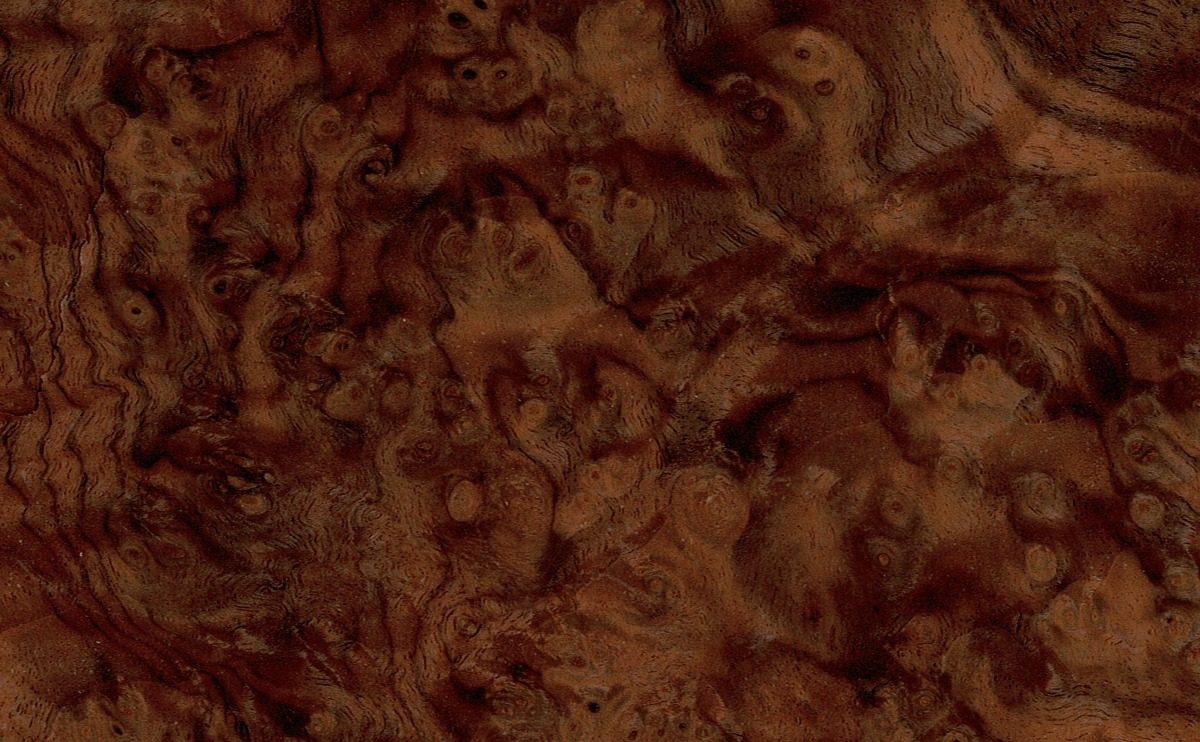
The heartwood runs from light brown to deep chocolate brown. It often has a purple tint and darker streaks. The sapwood is nearly white and can be up to 3 in (8 cm) wide on open-grown trees. Curly and other fancy grain patterns are common and prized.
Grain/Texture
The grain is usually straight. The Forest Service describes it as a fine, straight-grained wood.
Rot Resistance
High for heartwood. The USDA rates black walnut heartwood as very resistant to decay. The Wood Handbook places it one step lower, in its “resistant” group. Sapwood has no such protection.
Workability
Black walnut is easy to work with hand and machine tools. It stays stable once built. It glues and polishes well, and it holds paint and stain very well. Most people finish it with a clear coat to show off the color.
Odor
Not confirmed. We have not found a published source that describes its scent.
Allergies/Toxicity
Walnut dust can irritate skin and the nose. Some reports link it to asthma. The USDA lists no toxicity data for it. Health agencies treat all wood dust as a hazard, and the ACGIH classes walnut dust as a suspected human carcinogen. Wear a dust mask, use dust collection and keep skin covered when you sand or saw it.
Pricing/Availability
Supply is limited because good trees have been heavily cut, and much of the best wood now goes to veneer. Expect a higher price than most domestic hardwoods, and boards can be narrow.
Sustainability
Not listed in the CITES Appendices. The IUCN Red List rates black walnut as Least Concern (assessed February 16, 2018, population stable).
Common Uses
Fine furniture, cabinets, interior paneling and woodwork, veneer, gunstocks and novelties.
Sources
- USDA Forest Products Laboratory, Wood Handbook FPL-GTR-190 (2010), Chapters 2, 4, 5 and 14, research.fs.usda.gov
- USDA Forest Products Laboratory, Wood Handbook FPL-GTR-282 (2021), Chapter 5, strength check, research.fs.usda.gov
- Alden, H.A. 1995. Hardwoods of North America, USDA FPL-GTR-83, research.fs.usda.gov
- Silvics of North America, Black Walnut, research.fs.usda.gov
- IUCN Red List, Juglans nigra, iucnredlist.org
- CITES Appendices I, II and III, cites.org
- CCOHS, Wood Dust: Health Effects (revised 2023-03-28), ccohs.ca
- CDC NIOSH Pocket Guide to Chemical Hazards, Wood dust, cdc.gov
Photos
Burl veneer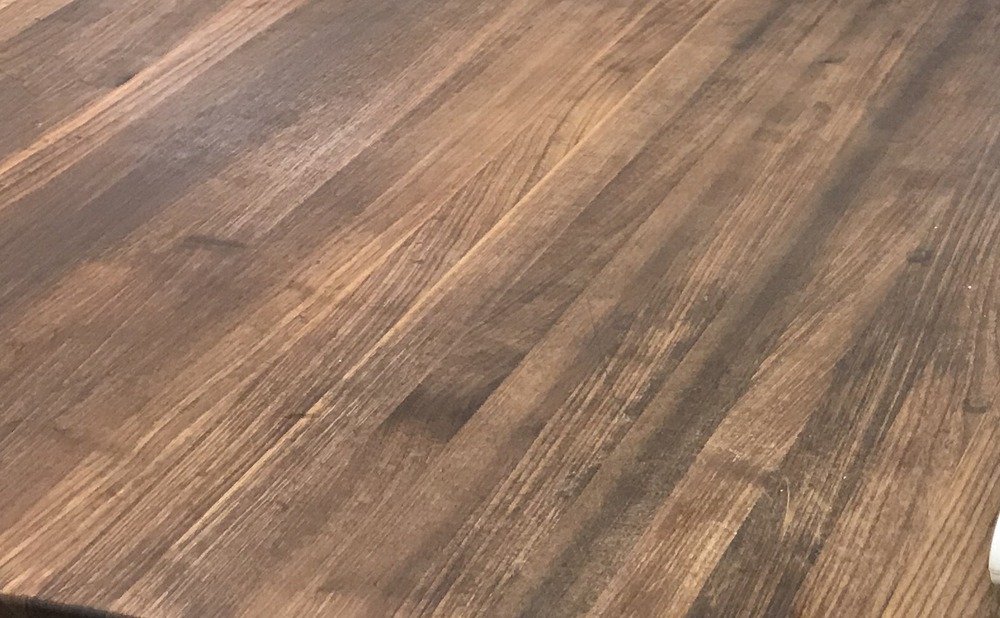 Workbench top
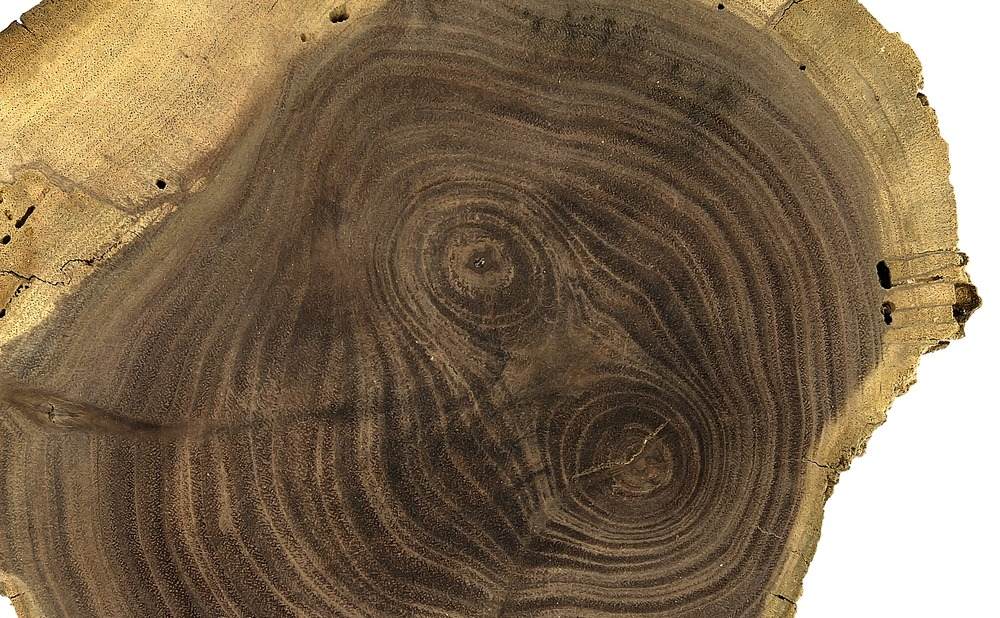 End grain, log disc