
Hardwood
Red Alder
Red alder (Alnus rubra) is a light tan to reddish brown, evenly textured hardwood from the Pacific coast of North America, used for furniture, cabinets, interior finish and plywood core stock. This guide covers its Janka hardness, weight, shrinkage, rot resistance, workability and common uses.
Specs
Wood Name
Red Alder
Common Name(s)
Red alder, Oregon alder, Pacific Coast alder, western alder
Scientific Name
Alnus rubra Bong.
Wood Type
Hardwood
Distribution
Red alder grows along the Pacific coast of North America, from southeastern Alaska through British Columbia, Washington and Oregon to southern California. It does best below about 1,500 ft (457 m) in the north. A few trees reach 3,300 ft (1,006 m) in the central part of its range. It is rare east of the Cascade and Sierra Nevada ranges, apart from some isolated stands in northern Idaho.
Tree Size
On good sites the tree reaches 100 to 130 ft (30 to 40 m). The trunk is 22 to 30 in (56 to 76 cm) across. In crowded stands the trunk is clear and slightly tapered. It is the largest American alder.
Average Dried Weight
HNA lists 28.0 lbs/ft³ (449 kg/m³) at 12% MC. Green wood weighs 46.0 lbs/ft³ (737 kg/m³).Source: Hardwoods of North America (HNA)
Specific Gravity (Basic, 12% MC)
The basic specific gravity (oven-dry weight, green volume) is 0.37. At 12% MC (oven-dry weight, volume at 12%) it is 0.41.
Janka Hardness
The side hardness is 590 lbf (2,600 N) at 12% MC. Green wood measures 440 lbf (2,000 N).
Modulus of Rupture
The bending strength is 9,800 psi (68 MPa) at 12% MC. Green wood measures 6,500 psi (45 MPa).
Elastic Modulus
The stiffness is 1,380,000 psi (9,500 MPa) at 12% MC. Green wood measures 1,170,000 psi (8,100 MPa).
Crushing Strength
The crushing strength parallel to grain is 5,820 psi (40.1 MPa) at 12% MC. Green wood measures 2,960 psi (20.4 MPa).
Shrinkage
Green to oven-dry, the wood shrinks 4.4% radially, 7.3% tangentially and 12.6% by volume. The tangential to radial ratio is 1.7.
Description
Color/Appearance
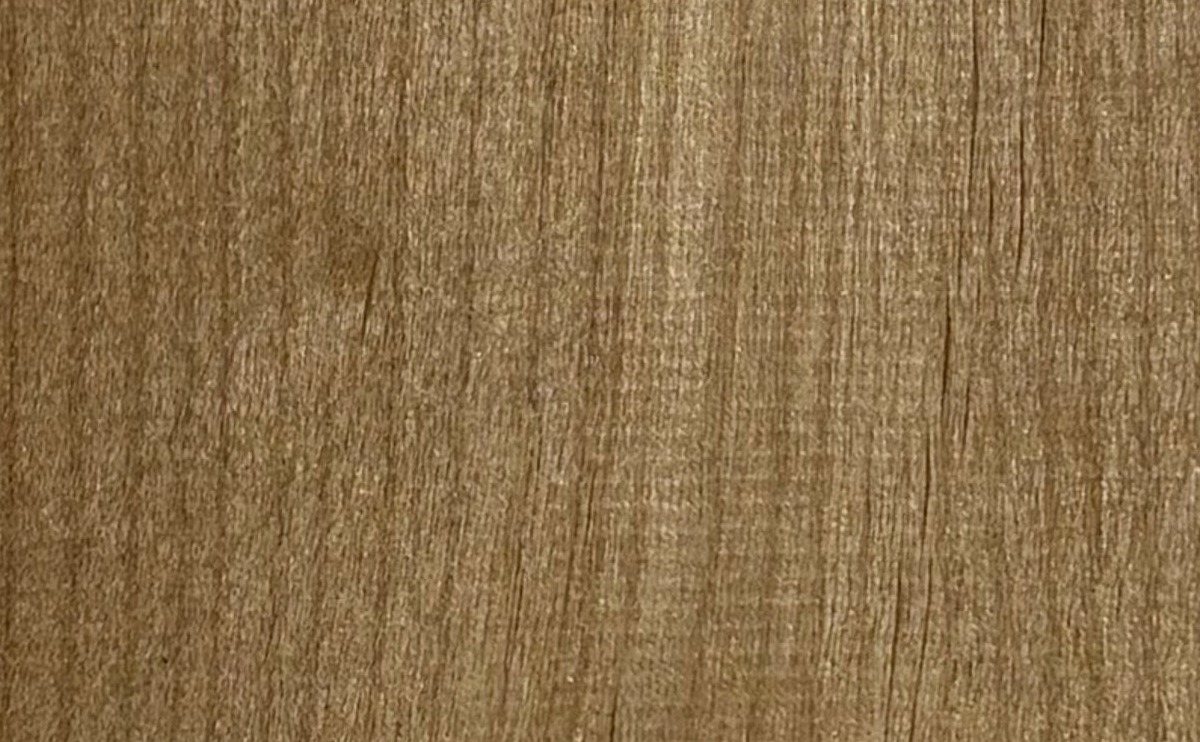
Fresh wood is almost white. It turns light tan or light brown with a yellow or reddish tinge in the air. Heartwood forms only in old trees, and there is no visible line between heartwood and sapwood.
Grain/Texture
The texture is even, with very fine pores. The wood is diffuse porous, moderately light and soft. Grain direction is Not confirmed.
Rot Resistance
HNA rates the heartwood as slightly resistant or not resistant to decay. Process logs quickly in warm weather, or store them in water. Stack green lumber with care and dry it fast to avoid stain.
Workability
The wood is excellent for turning and polishing. It takes glue, paint and stain well. The German wood guide says it needs only moderate machining effort. Fibers can fuzz around knots, and the wood can brown while drying.
Odor
Not confirmed
Allergies/Toxicity
HNA says red alder can cause dermatitis. Health agencies treat all wood dust as a hazard, and it can irritate the nose, throat and skin. Wear a dust mask and use dust collection when you cut or sand it.
Pricing/Availability
Red alder is the only commercial alder in North America and the most common hardwood in the Pacific Northwest. Ireland imports it for kitchen cabinets. Price tier is Not confirmed.
Sustainability
IUCN rates Alnus rubra as Least Concern (assessed July 15, 2013, stable population). It does not appear in the CITES Appendices valid from March 5, 2026. The tree grows fast and fixes nitrogen in the soil.
Common Uses
Red alder makes furniture, cabinets, interior finish and factory appearance-grade lumber. It also makes core stock for plywood, pallets and nonstructural lumber. Mills use chips for pulp and paper. People use it for fuel, charcoal and smoking food.
Sources
- Hardwoods of North America, USDA Forest Products Laboratory, FPL-GTR-83 (Alnus rubra entry), doi.org
- Wood Handbook, USDA Forest Products Laboratory (FPL-GTR-282, Tables 4-3 and 5-3a to 5-3c, red alder), fpl.fs.usda.gov
- Informationsdienst Holz, Erlenhoelzer (German wood guide, Merkblatt 086), holzvomfach.de
- COFORD, Guide to Irish hardwoods (kitchen cabinet note), coford.ie
- IUCN Red List, Alnus rubra (Stritch 2014), iucnredlist.org
- CCOHS, Wood Dust – Health Effects (revised March 28, 2023), ccohs.ca
- Exotic Wood Zone, red alder lumber board (banner photo), exoticwoodzone.com
Photos
Face grain, board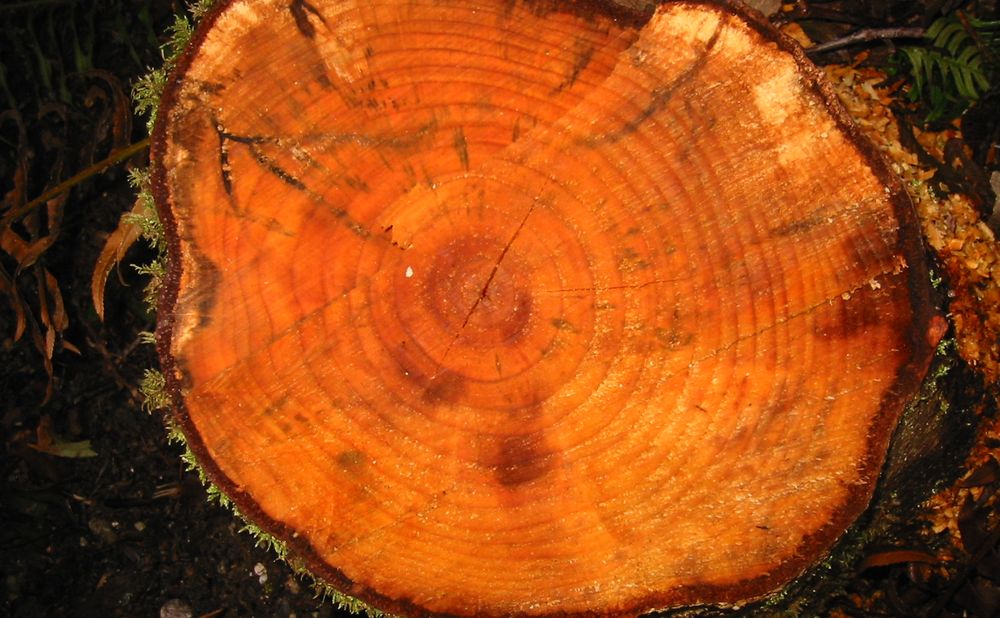 End grain, stump