
Hardwood
Red Oak
Red oak (Quercus rubra) is a reddish brown, coarse-textured hardwood from eastern North America, prized for furniture, flooring, millwork and veneer. This guide covers its Janka hardness, weight, shrinkage, rot resistance, workability and common uses.
Photo: Philipp Zinger
Specs
Wood Name
Red Oak (northern red oak)
Common Name(s)
Northern red oak, red oak, common red oak, eastern red oak, mountain red oak, gray oak
Scientific Name
Quercus rubra
Wood Type
Hardwood
Distribution
Eastern North America. The tree grows from Nova Scotia and Ontario through the northeastern and midwestern United States. It reaches west to eastern Nebraska and Oklahoma and south to Arkansas, Alabama, Georgia and North Carolina. A few small stands grow in Louisiana and Mississippi.
Tree Size
65 to 98 ft (20 to 30 m) tall, 24 to 36 in (61 to 91 cm) trunk diameter
Average Dried Weight
44 lbs/ft³ (705 kg/m³)Source: USDA Hardwoods of North America (FPL-GTR-83), at 12% MC
Specific Gravity (Basic, 12% MC)
Basic: 0.56 (oven-dry weight, green volume), 12% MC: 0.63 (oven-dry weight, volume at 12% MC)Source: USDA Wood Handbook (FPL-GTR-190)
Janka Hardness
1,290 lbf (5,740 N)Source: USDA Wood Handbook (FPL-GTR-190), side hardness at 12% MC
Modulus of Rupture
14,300 lbf/in² (98.6 MPa)Source: USDA Wood Handbook (FPL-GTR-190), at 12% MC
Elastic Modulus
1,820,000 lbf/in² (12.55 GPa)Source: USDA Wood Handbook (FPL-GTR-190), at 12% MC
Crushing Strength
6,760 lbf/in² (46.6 MPa)Source: USDA Wood Handbook (FPL-GTR-190), parallel to grain, at 12% MC
Shrinkage
Radial: 4.0%, Tangential: 8.6%, Volumetric: 13.7%, T/R ratio: about 2.2Source: USDA Wood Handbook (FPL-GTR-190), green to oven-dry, as a share of green size
Description
Color/Appearance
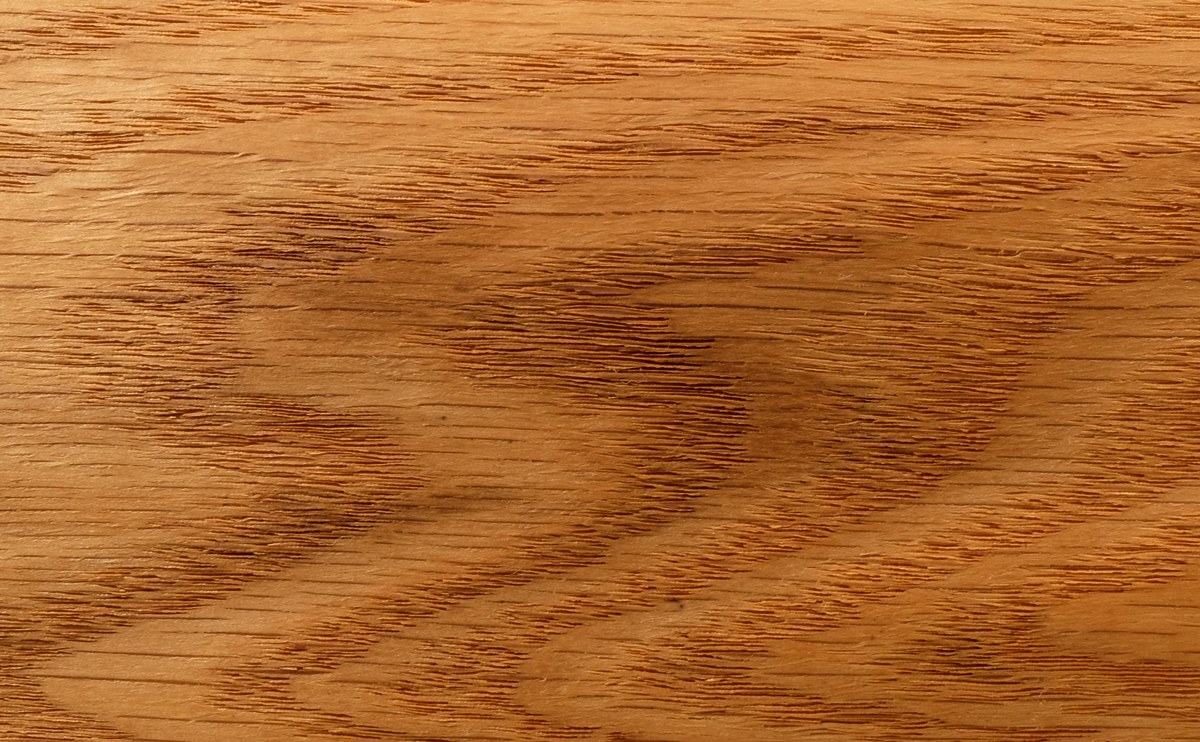
The heartwood is brown with a tinge of red. The sapwood is nearly white and about 1 to 2 in (2 to 5 cm) wide. Quartersawn boards show wide, bold ray flecks.
Grain/Texture
The grain runs straight and the texture is coarse. The pores are large and open.
Rot Resistance
Low. The USDA rates red oak heartwood from slightly resistant to nonresistant to decay. Keep it dry and off the ground. Posts and similar parts need preservative treatment to last.
Workability
Red oak cuts, planes and glues well. It holds screws and other fasteners very well. It can split when nailed, so drill a pilot hole first. It takes finishes well. It shrinks a fair amount as it dries, so dry it fully and plan for some movement.
Odor
Not confirmed. We have not found a published source that describes its scent.
Allergies/Toxicity
Oak dust can irritate skin, eyes and airways. It may trigger asthma, a runny nose or a rash in some people. Health agencies treat all wood dust as a hazard, and the ACGIH classes oak dust as a confirmed human carcinogen. Wear a dust mask, use dust collection and keep skin covered when you sand or saw it.
Pricing/Availability
Red oak is easy to find in many thicknesses and widths. The price is moderate for a domestic hardwood.
Sustainability
Not listed in the CITES Appendices. The IUCN Red List rates northern red oak as Least Concern (assessed April 29, 2015, population stable, marked “needs updating”).
Common Uses
Furniture, flooring, general millwork, interior paneling, veneer and plywood, boxes, pallets and crates.
Sources
- USDA Forest Products Laboratory, Wood Handbook FPL-GTR-190 (2010), Chapters 2, 4, 5 and 14, research.fs.usda.gov
- USDA Forest Products Laboratory, Wood Handbook FPL-GTR-282 (2021), Chapter 5, strength check, research.fs.usda.gov
- Alden, H.A. 1995. Hardwoods of North America, USDA FPL-GTR-83, research.fs.usda.gov
- Silvics of North America, Northern Red Oak, research.fs.usda.gov
- IUCN Red List, Quercus rubra, iucnredlist.org
- CITES Appendices I, II and III, cites.org
- CCOHS, Wood Dust: Health Effects (revised 2023-03-28), ccohs.ca
- CDC NIOSH Pocket Guide to Chemical Hazards, Wood dust, cdc.gov
Photos
Cathedral figure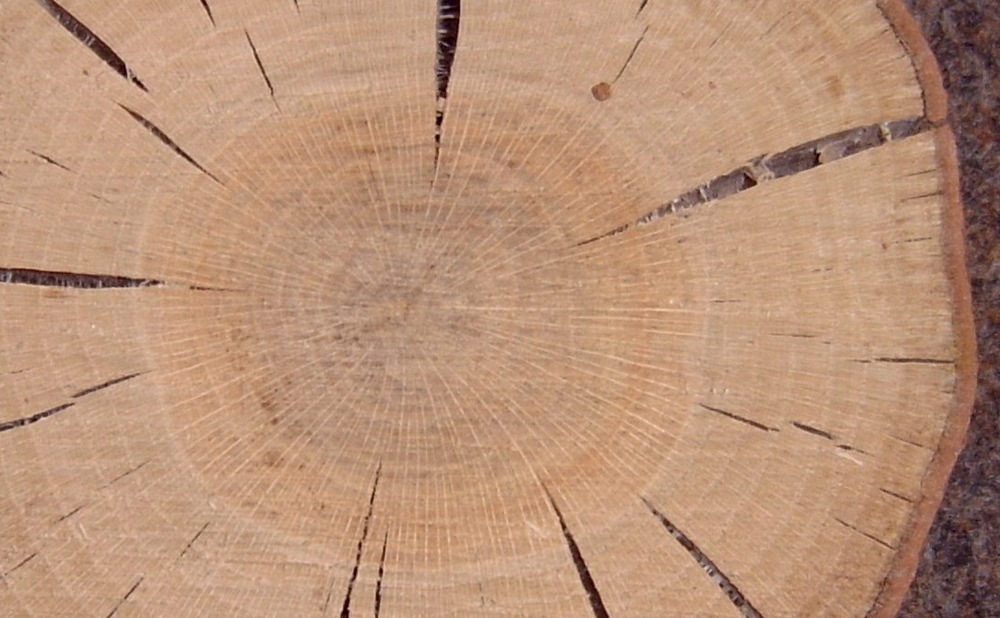 End grain, log disc