
Hardwood
Tamo Ash
Tamo ash (Fraxinus mandshurica) is a light brown Manchurian ash, sold mainly as figured Japanese veneer for furniture, musical instruments and marquetry. This guide covers its Janka hardness, weight, shrinkage, rot resistance, workability and common uses.
Specs
Wood Name
Tamo Ash
Common Name(s)
Tamo ash, Japanese ash, Manchurian ash. Sellers often reserve the name tamo for figured veneer, and call plain wood Japanese ash.
Scientific Name
Fraxinus mandshurica Rupr. (sometimes spelled mandschurica)
Wood Type
Hardwood
Distribution
Tamo ash is native to northern Asia, including China, Japan, the Democratic People’s Republic of Korea, the Republic of Korea and the Russian Federation (Sakhalin).
Tree Size
Typical trees are 65 to 100 ft (20 to 30 m) tall with a trunk 12 to 24 in (0.3 to 0.6 m) across. In Japan the tree can reach 98 ft (30 m).
Average Dried Weight
Average dried weight is 35 lbs/ft³ (560 kg/m³) at 12% MC.
Specific Gravity (Basic, 12% MC)
Specific gravity is 0.50 basic (oven-dry weight, green volume) and 0.56 at 12% MC.
Janka Hardness
Side hardness is 1,010 lbf (4,490 N), an estimate from density, not a measured test.
Modulus of Rupture
Modulus of rupture is 10,810 psi (74.5 MPa).
Elastic Modulus
Elastic modulus is 1,195,000 psi (8,240 MPa).
Crushing Strength
Not confirmed
Shrinkage
Not confirmed
Description
Color/Appearance
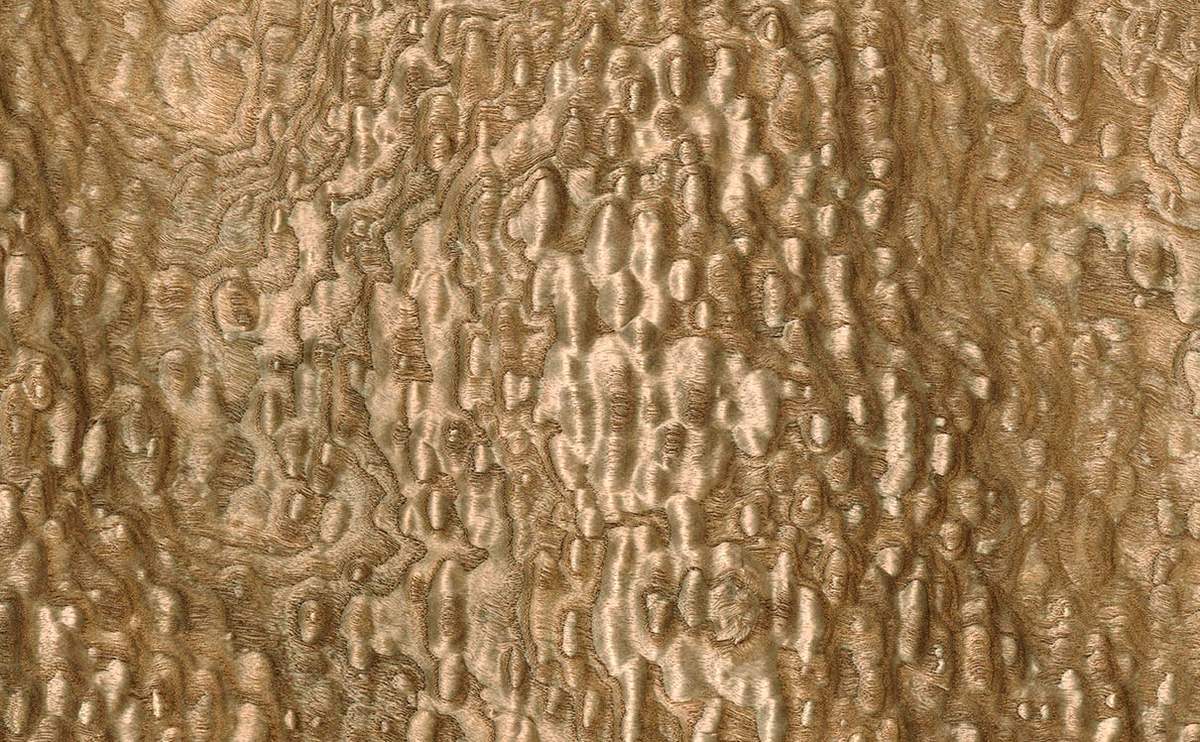
The heartwood is light to medium brown. The sapwood is often wide, beige to light brown, and is not always sharply separated from the heartwood. Rotary-cut veneer can show a deep, almost three-dimensional “peanut” figure, named for a pattern that looks like peanut shells.
Grain/Texture
The grain is generally straight, though figured wood is what sellers usually offer. The texture is coarse and uneven.
Rot Resistance
The heartwood is rated perishable, with poor resistance to insects and borers.
Workability
It works well with hand and machine tools, and it glues, stains and finishes well.
Odor
The wood gives off a noticeable, moderately unpleasant smell when cut or shaped.
Allergies/Toxicity
Reports link woods of the Fraxinus genus to skin irritation and reduced lung function. Health agencies treat all wood dust as a hazard, and it can irritate the nose, throat and skin. Wear a dust mask and use dust collection when you cut or sand it.
Pricing/Availability
The wood is sold almost only as veneer, and nearly always with some figure. Supply is limited, with most veneer exported from Japan, and prices are high for an imported veneer and rise with the amount of figure. Prices are not quoted here.
Sustainability
Fraxinus mandshurica is listed as Least Concern globally (assessed November 1, 2017; published 2018). The population is decreasing. The tree has been heavily logged in Russia and China, is classed Vulnerable on the China Plant Red List, and is protected in China, but it remains widespread and able to regenerate, which is why the global rating is Least Concern. It is listed in Appendix III for the Russian Federation only, with annotation #5 (logs, sawn wood and veneer sheets).
Common Uses
Veneer, musical instruments (drum shells and guitars), fine furniture, marquetry and other small specialty items.
Sources
- IUCN Red List, Fraxinus mandshurica (Oldfield 2018; assessed 2017), iucnredlist.org
- CITES Appendices I, II and III valid from March 5, 2026, cites.org Fraxinus mandshurica is listed in Appendix III (Russian Federation) with annotation #5.
- CITES Checklist search, Fraxinus mandshurica, checklist.cites.org
- BfN CITES tree list, March 5, 2026 (pointer only; the Appendices above are the legal text), bfn.de
- The Wood Database, tamo-ash page (secondary reference, used for cross-checks and gaps), wood-database.com
- CCOHS, Wood Dust – Health Effects (revised March 28, 2023), ccohs.ca
- Photo: Eric Meier, The Wood Database, wood-database.com
- Photo: Roser AG, roser-swiss.com
- Photo: Treviso Legno, trevisolegno.com
Photos
Peanut figure, board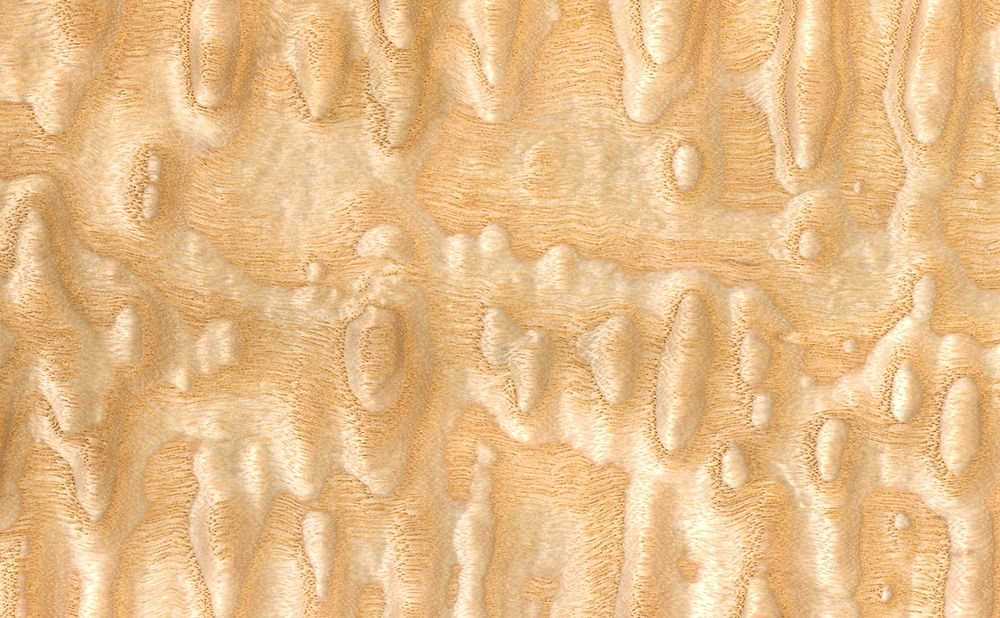 Face grain, veneer
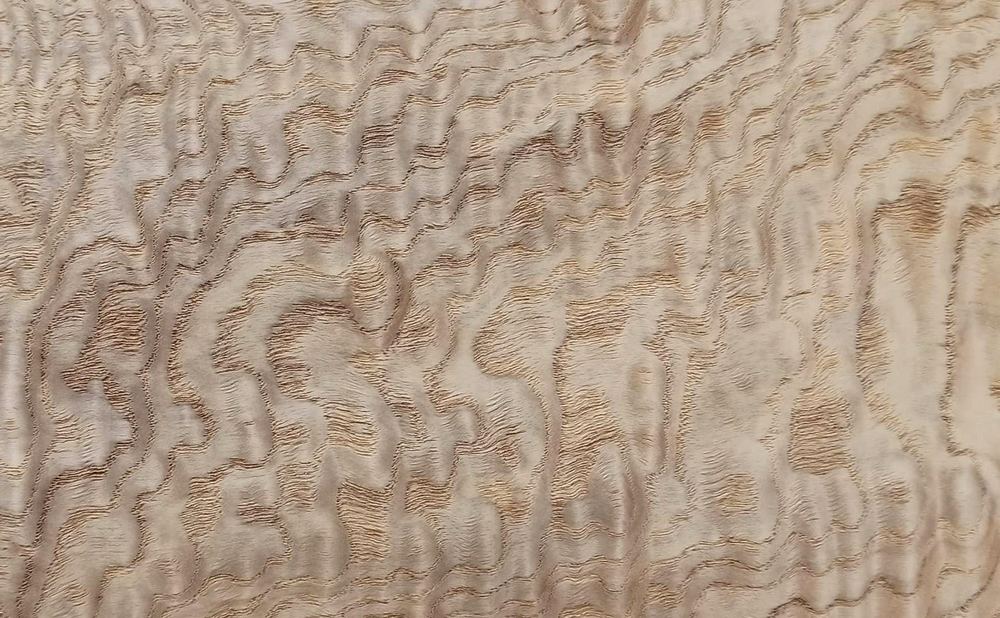 Figure close-up, veneer