
Hardwood
White Ash
White ash (Fraxinus americana) is a tough, light to medium brown North American hardwood used for tool handles, baseball bats and flooring, and now critically endangered because of the emerald ash borer. This guide covers its Janka hardness, weight, shrinkage, rot resistance, workability and common uses.
Specs
Wood Name
White Ash
Common Name(s)
White ash, American white ash, Biltmore ash, Biltmore white ash
Scientific Name
Fraxinus americana L.
Wood Type
Hardwood
Distribution
White ash is native to eastern North America, from Cape Breton Island, Nova Scotia, to northern Florida, and west from eastern Minnesota to eastern Texas. It also occurs in parts of Mexico and is introduced in Hawaii.
Tree Size
Trees are often listed at 65 to 100 ft (20 to 30 m) tall with a trunk 24 to 60 in (0.6 to 1.5 m) across. Other accounts call it a medium-sized tree but give no maximum height.
Average Dried Weight
Average dried weight is 42 lbs/ft³ (675 kg/m³) at 12% MC.
Specific Gravity (Basic, 12% MC)
Specific gravity is 0.55 basic (oven-dry weight, green volume). At 12% MC, published values are 0.60 and 0.67.
Janka Hardness
Side hardness is 1,320 lbf (5,870 N) at 12% MC.
Modulus of Rupture
Published modulus of rupture values at 12% MC are 15,400 psi (106.0 MPa) and a slightly lower 15,000 psi (103.5 MPa).
Elastic Modulus
Elastic modulus is 1,740,000 psi (12,000 MPa) at 12% MC.
Crushing Strength
Crushing strength is 7,410 psi (51.1 MPa) parallel to grain at 12% MC.
Shrinkage
Green to oven-dry, shrinkage is 4.9% radial, 7.8% tangential and 13.3% by volume. The tangential to radial ratio works out to 1.6.
Description
Color/Appearance
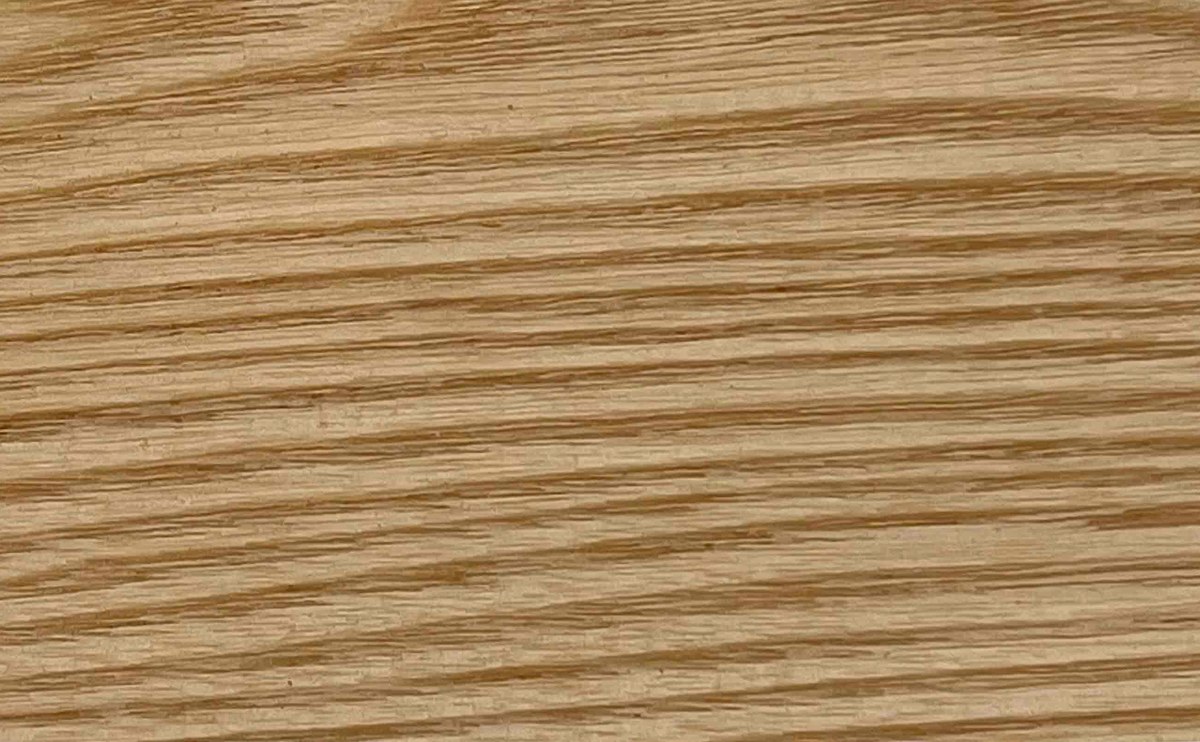
The heartwood is light to medium brown. Some descriptions of the white ash group call it brown, with light or nearly white sapwood. The sapwood can be wide, beige to light brown, and is not always sharply separated from the heartwood.
Grain/Texture
The wood is ring-porous with a medium to coarse texture, much like oak. The grain is nearly always straight and regular, though curly or figured boards turn up now and then.
Rot Resistance
The ashes fall in the lowest decay-resistance group (slightly or nonresistant). The heartwood is also described as perishable, or only slightly durable, and does not resist insects.
Workability
It works well with hand and machine tools, bends well with steam, and glues, stains and finishes well.
Odor
The wood gives off a noticeable, moderately unpleasant smell when cut or shaped.
Allergies/Toxicity
Reports link woods of the Fraxinus genus to skin irritation and reduced lung function. Health agencies treat all wood dust as a hazard, and it can irritate the nose, throat and skin. Wear a dust mask and use dust collection when you cut or sand it.
Pricing/Availability
Ash ranks among the cheapest utility hardwoods sold in the United States, and should cost about the same as oak. Prices are not quoted here. Live and dead white ash is being widely harvested because of the emerald ash borer.
Sustainability
Fraxinus americana is listed as Critically Endangered under criteria A3e+4ae (assessed March 29, 2017; published 2017). The emerald ash borer, an invasive beetle, is killing ash trees across North America and is behind the rating; a decline of at least 80% is assumed over the next 100 years. Live and dead trees continue to be harvested.
Common Uses
White ash is sought for tool handles, oars, baseball bats and other sporting goods, because it is tough and takes shock well. Other uses include flooring, millwork, boxes and crates, and turned objects.
Sources
- IUCN Red List, Fraxinus americana (Jerome, Westwood, Oldfield and Romero-Severson, 2017), iucnredlist.org
- USDA Forest Service, Silvics of North America, Volume 2, Hardwoods (Agriculture Handbook 654), Fraxinus americana (Schlesinger, 1990), research.fs.usda.gov
- USDA Forest Service, Wood Handbook (FPL-GTR-282), chapter 5, Tables 5-3a and 5-3b (strength of U.S. hardwoods), research.fs.usda.gov
- USDA Forest Service, Wood Handbook (FPL-GTR-282), chapter 4, Table 4-3a (shrinkage), research.fs.usda.gov
- USDA Forest Service, Wood Handbook (FPL-GTR-282), chapter 14, Table 14-1 (decay resistance groups), research.fs.usda.gov
- USDA Forest Service, Wood Handbook (FPL-GTR-282), chapter 2 (species notes), research.fs.usda.gov
- The Wood Database, white-ash page (secondary reference, used for cross-checks and gaps), wood-database.com
- CITES Appendices I, II and III valid from March 5, 2026, cites.org
- CITES Checklist search, Fraxinus americana (no listing returned; the Appendices above are the legal text), checklist.cites.org
- BfN CITES tree list, March 5, 2026 (pointer only; the Appendices above are the legal text), bfn.de
- CCOHS, Wood Dust – Health Effects (revised March 28, 2023), ccohs.ca
- Photo: Exotic Wood Zone, exoticwoodzone.com
- Photo: Famartin, Wikimedia Commons, CC BY-SA 4.0, commons.wikimedia.org License, creativecommons.org
Photos
Face grain, board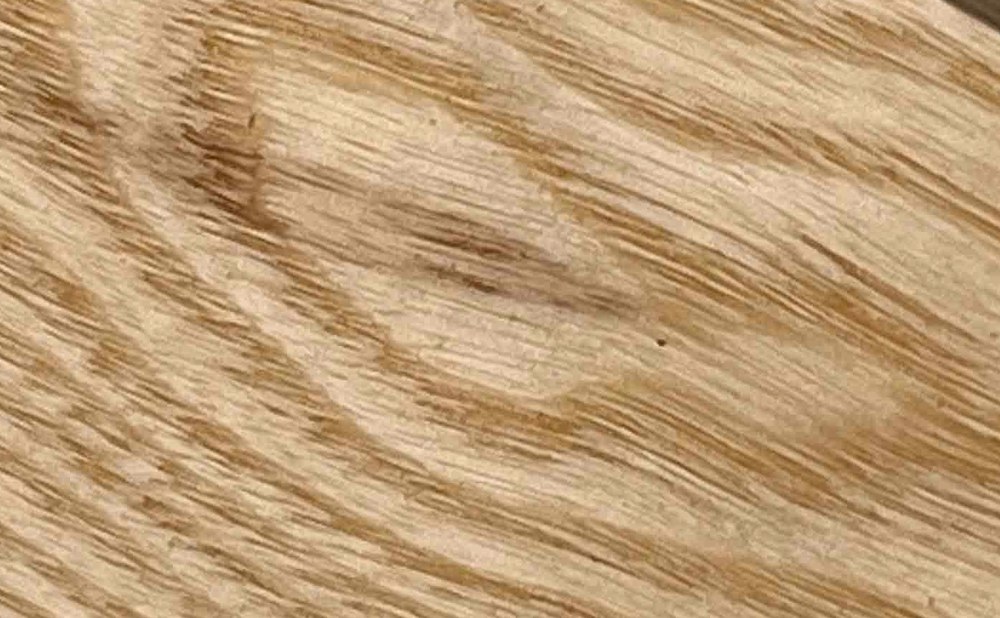 Face grain, board
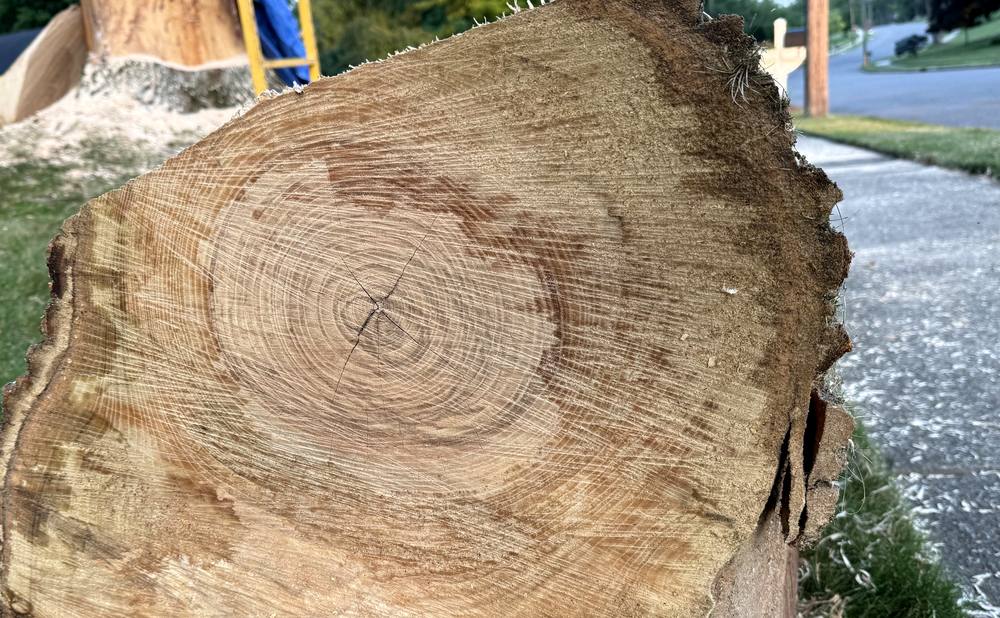 End grain, log