
Hardwood
White Oak
White oak (Quercus alba) is a light to medium brown, coarse-textured hardwood from the eastern United States, prized for barrels, boat planking, flooring and furniture. This guide covers its Janka hardness, weight, shrinkage, rot resistance, workability and common uses.
Photo: Philipp Zinger
Specs
Wood Name
White Oak
Common Name(s)
White oak, American white oak, stave oak
Scientific Name
Quercus alba
Wood Type
Hardwood
Distribution
Most of the eastern United States. The tree grows from southwestern Maine and southern Quebec west to southern Ontario, central Michigan and southeastern Minnesota. It reaches south to western Iowa, eastern Kansas, Oklahoma and Texas, and east to northern Florida and Georgia. It is mostly missing from the high Appalachians, the lower Mississippi Delta and the Texas and Louisiana coast.
Tree Size
80 to 100 ft (24 to 30 m) tall, 36 to 48 in (91 to 122 cm) trunk diameter. Record trees reached 150 ft (46 m) and 96 in (244 cm) across.
Average Dried Weight
48 lbs/ft³ (769 kg/m³)Source: USDA Hardwoods of North America (FPL-GTR-83), at 12% MC
Specific Gravity (Basic, 12% MC)
Basic: 0.60 (oven-dry weight, green volume), 12% MC: 0.68 (oven-dry weight, volume at 12% MC)Source: USDA Wood Handbook (FPL-GTR-190)
Janka Hardness
1,360 lbf (6,050 N)Source: USDA Wood Handbook (FPL-GTR-190), side hardness at 12% MC
Modulus of Rupture
15,200 lbf/in² (104.8 MPa)Source: USDA Wood Handbook (FPL-GTR-190), at 12% MC
Elastic Modulus
1,780,000 lbf/in² (12.27 GPa)Source: USDA Wood Handbook (FPL-GTR-190), at 12% MC
Crushing Strength
7,440 lbf/in² (51.3 MPa)Source: USDA Wood Handbook (FPL-GTR-190), parallel to grain, at 12% MC
Shrinkage
Radial: 5.6%, Tangential: 10.5%, Volumetric: 16.3%, T/R ratio: about 1.9Source: USDA Wood Handbook (FPL-GTR-190), green to oven-dry, as a share of green size
Description
Color/Appearance
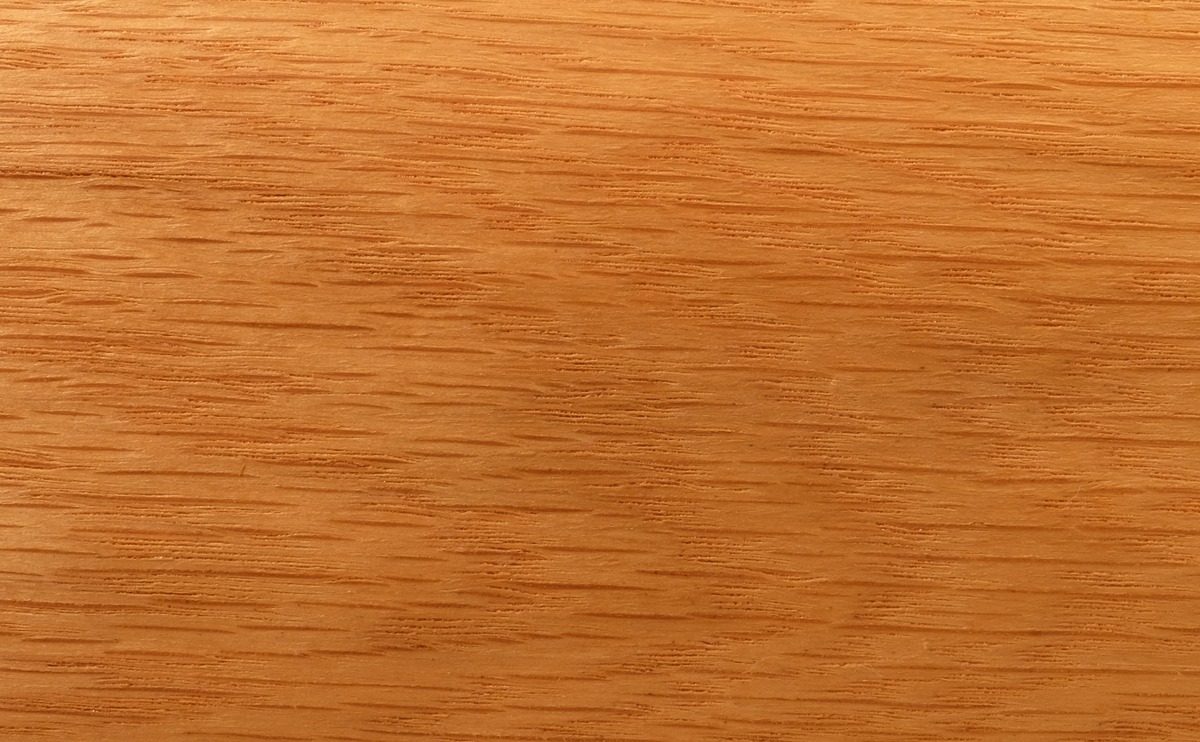
The heartwood ranges from light to dark brown, often with a gray tone. The sapwood is white to very light brown. Quartersawn boards show wide, bold ray flecks.
Grain/Texture
The grain runs straight and the texture is coarse. Tiny plugs called tyloses fill the heartwood pores and keep liquid from passing through.
Rot Resistance
High. The USDA rates white oak heartwood as very resistant to decay. The Wood Handbook places it one step lower, in its “resistant” group. Either way, it is a top pick for wet or outdoor use. The rating applies to heartwood, not sapwood.
Workability
White oak cuts, planes and glues well. It holds screws and other fasteners very well. It can split when nailed, so drill a pilot hole first. It takes finishes well. It shrinks a lot as it dries, so dry it fully and plan for movement, especially in flatsawn boards.
Odor
Not confirmed. We have not found a published source that describes its scent.
Allergies/Toxicity
Oak dust can irritate skin, eyes and airways. It may trigger asthma, a runny nose or a rash in some people. Health agencies treat all wood dust as a hazard, and the ACGIH classes oak dust as a confirmed human carcinogen. Wear a dust mask, use dust collection and keep skin covered when you sand or saw it.
Pricing/Availability
White oak is easy to find in many thicknesses and widths. The price is moderate for a domestic hardwood and often a little higher than red oak.
Sustainability
Not listed in the CITES Appendices. The IUCN Red List rates white oak as Least Concern (assessed March 11, 2015, marked “needs updating”). The same page lists its population trend as decreasing and names housing development, fire suppression and problem native species and diseases among its threats.
Common Uses
Barrels and other liquid-tight casks, boat and ship planking, flooring, furniture, doors, millwork, veneer, railroad ties and fence posts.
Sources
- USDA Forest Products Laboratory, Wood Handbook FPL-GTR-190 (2010), Chapters 2, 4, 5 and 14, research.fs.usda.gov
- USDA Forest Products Laboratory, Wood Handbook FPL-GTR-282 (2021), Chapter 5, strength check, research.fs.usda.gov
- Alden, H.A. 1995. Hardwoods of North America, USDA FPL-GTR-83, research.fs.usda.gov
- Silvics of North America, White Oak, research.fs.usda.gov
- IUCN Red List, Quercus alba, iucnredlist.org
- CITES Appendices I, II and III, cites.org
- CCOHS, Wood Dust: Health Effects (revised 2023-03-28), ccohs.ca
- CDC NIOSH Pocket Guide to Chemical Hazards, Wood dust, cdc.gov
Photos
Ray flecks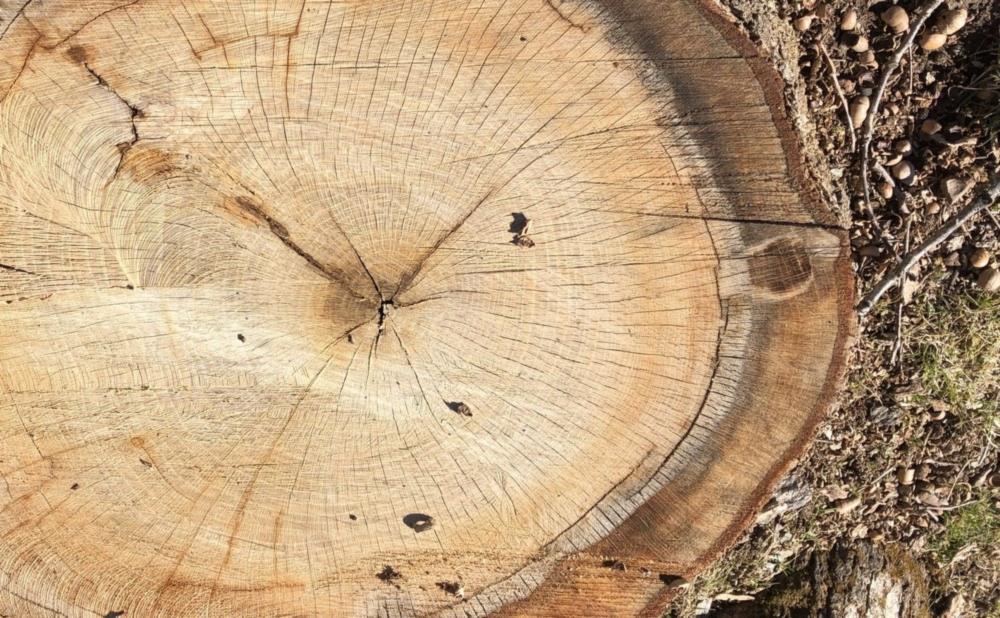 End grain, trunk end