
10 of the Most Innovative Building Materials that could Revolutionize the Construction Industry

Date:

The much awaited and anticipated revolution in construction is gaining momentum, now have drones, virtual reality, augmented reality, BIM, project management and more.

But it doesn’t stop here! Researchers and various institutes are taking technology to the next level.

Development in concrete and other building materials has been aggressive and intense.

Cooling System in Bricks
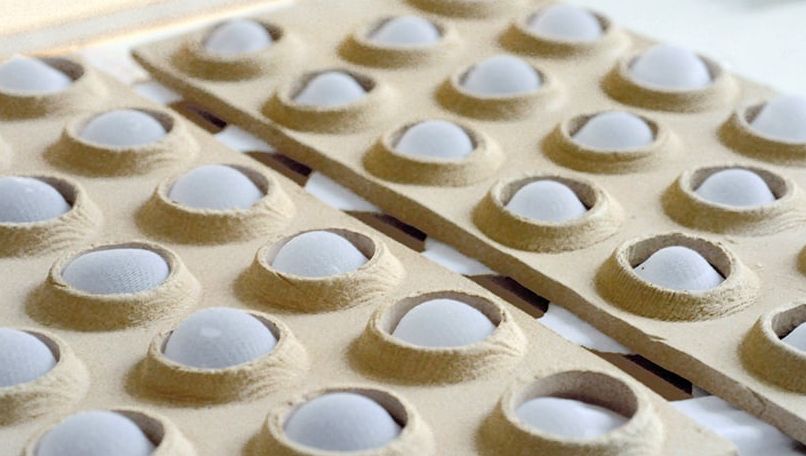
Cooling System in Bricks - Developed by: Institute of Advanced Architecture of Catalonia
Source / Cooling System in Bricks – Developed by: Institute of Advanced Architecture of Catalonia
Hydroceramics have the ability to reduce indoor temperature up to 6 degrees Celsius.

Through the combination of clay and hydrogel, students at the Institute of Advanced Architecture of Catalonia have created a new material that has a cooling effect on building interiors.

Its cooling effect comes from the presence of hydrogel in its structure which absorbs water up to 500 times its weight.

The absorbed water is released to reduce the temperature during hot days.

Transparent Wood
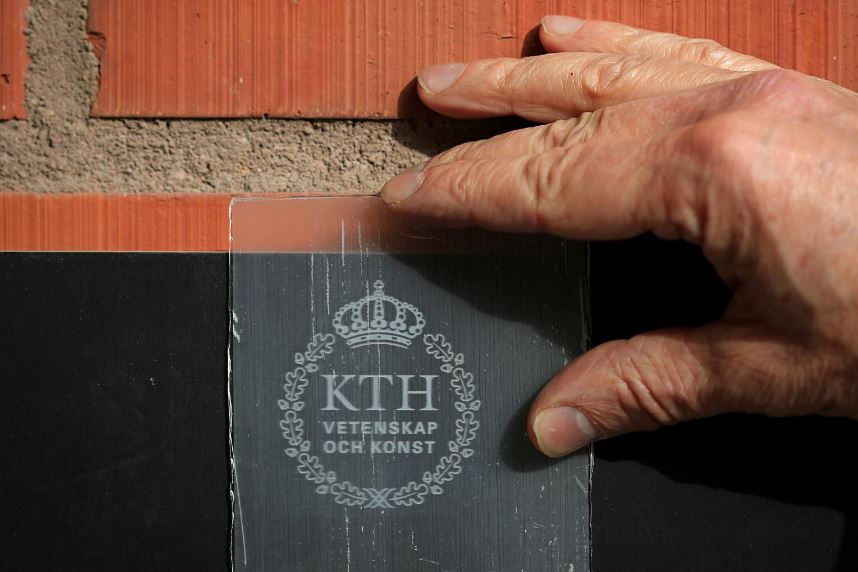
Transparent Wood - Developed by: KTH Royal Institute of Technology
Source / Transparent Wood – Developed by: KTH Royal Institute of Technology
When the lignin is removed, the wood becomes beautifully white. But because wood isn’t naturally transparent, we achieve that effect with some nanoscale tailoring.

A group of researchers from KTH Royal Institute of Technology in Stockholm has developed Optically Transparent Wood (TW), a new material that could greatly impact the way we develop our architectural projects.

Published in the American Chemical Society’s journal Biomacromolecules, the transparent timber is created through a process that removes the chemical lignin from a wood veneer, causing it to become very white.

This white porous veneer is then impregnated with a transparent polymer, matching the optical properties of the individual cells and making the whole material translucent.

Pollution Absorbing Bricks
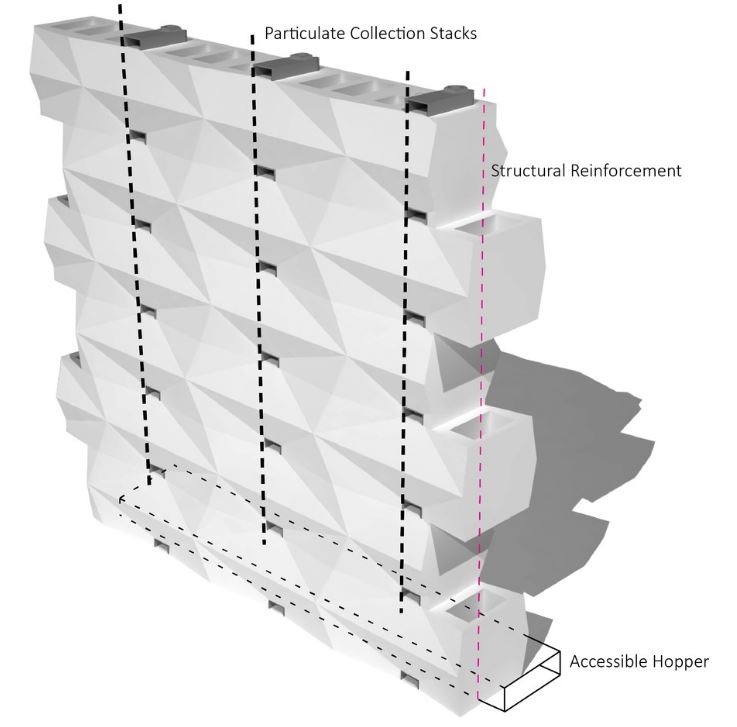
Pollution Absorbing Bricks - Developed by: Cal Poly
Source / Pollution Absorbing Bricks – Developed by: Cal Poly
By performing wind tunnel tests, it was proven that the system can filter 30% fine particle pollutants and 100% coarse particles such as dust.

The Breathe Brick sucks in pollutants in the air and releases filtered air.

The innovative material is designed to be part of a building’s standard ventilation system.

It has a two-layer facade system, with the specialist bricks on the outside and standard insulation on the inside.

Cigarette Butts to Make Bricks

Cigarette Butts to Make Bricks - Developed by: Dr Abbas Mohajerani / RMIT
Source / Cigarette Butts to Make Bricks – Developed by: Dr Abbas Mohajerani / RMIT
On a yearly basis, 6 million cigarettes are manufactured and they produce 1.2 million tonnes of cigarette butt waste.

The impact on the environment is tremendous.

Elements such as arsenic, chromium, nickel and cadmium enter the soil and harm nature.

In order to reduce the impact of cigarette butts on the environment, researchers at RMIT developed lighter and more energy efficient bricks made of cigarette butts.

In short, innovatively utilizing waste in a much more eco-friendly manner.

Biologically Produced Furniture

Biologically Produced Furniture - Developed by: Terreform One and Genspace
Source / Biologically Produced Furniture – Developed by: Terreform One and Genspace
This process is low energy, pollution free, and requires low technology for manufacture.

Another very beautiful innovation in the construction industry is the invention of bio-plastic furniture.

So far there are two pieces of furniture created through this material – a chaise lounge and a small chair for kids.

Martian Concrete

Martian Concrete - Developed by: Northwestern University
Source / Martian Concrete – Developed by: Northwestern University
In order to make the Martian concrete, sulphur is heated at 240 degrees Celsius which melts it into a liquid.

It’s finally done. We have concrete that can be used to build structures in Mars now.

The researching team at Northwestern University has created concrete that can be made with materials available on Mars.

Light Generating Cement

Light Generating Cement - Developed by: UMSNH of Morelia
Source / Light Generating Cement – Developed by: UMSNH of Morelia
Energy usage is low because the cement can be created at room temperature.

Dr Jose Carlos Rubio Avalos from UMSNH of Morelia has created a cement that has the ability to absorb and irradiate light. With this new light generating cement the potential uses and application of it can be huge.

The CABKOMA Strand Rod

The CABKOMA Strand Rod - Developed by: Komatsu Seiren Fabric Laboratory
Source / The CABKOMA Strand Rod – Developed by: Komatsu Seiren Fabric Laboratory
A single strand of CABKOMA Strand Pod of 160 Meter length weighs only 12 kg which is 5 times lighter compared to a metal rod.

The Komatsu Seiren Fabric Laboratory, based in Japan has created a new material called the CABKOMA Strand Rod.

It is a thermoplastic carbon fiber composite.

The strand is the lightest seismic reinforcement and is very aesthetically pleasing.

Floating Piers

Floating Piers - by Christo and Jeanne-Claude
Floating Piers – Developed by Christo and Jeanne-Claude
The floating dock system is composed of 220,000 polyethene cubes of high density

Over the water of Italy’s Lake Iseo, you can see another great innovation in the construction industry — Floating piers by artists, Christo and Jean-Claude.

It is a three-kilometer long walkway with 100,000 square meters of yellow cloth wrapped around it. The cubes undulate along the waves of the lake.

Self-Healing Concrete
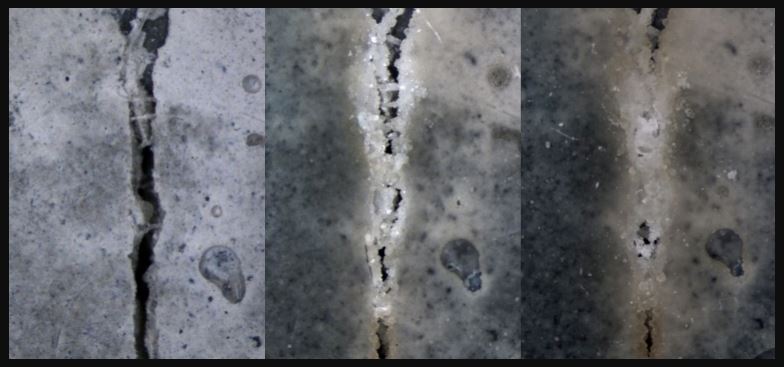
Self-Healing Concrete - Developed by: Delft University
Source / Self-Healing Concrete – Developed by: Delft University
It is estimated that this innovative technology could save $90 million annually.

Dutch civil engineer, Or Schlangen at Delft University has created a self-healing concrete.

This is demonstrated by breaking the material in two, putting the pieces together, and heating the concrete in a microwave oven.

Once the melted material cools down, it joins together.

[Article Source: Geniebelt]


Amazing Builder Partners



Popular

Share post:

More like this
Related

Epoxy Garage Floor Coating DIY: Mistakes Checklist Before You Pour

An epoxy-coated garage floor looks sharp, cleans up easily,...

How to Paint Kitchen Cabinets Without the 12 Common Mistakes

Painting kitchen cabinets is one of the biggest visual...

How to Install Vinyl Plank Flooring: A Beginner’s Weekend Guide

Installing luxury vinyl plank is one of the more...

12 Raised Garden Bed Ideas for Beginners (Plans, Soil & Mistakes)

Raised garden beds are one of the easiest ways...

Hardwood Floor Refinishing Mistakes That Ruin a Weekend DIY

Sanding and a fresh finish can make worn hardwood...

How to Stain a Deck the Right Way: A Weekend Checklist

A wood deck that has turned gray, splintery, or...

10 Home Staircase Design Trends for a Stylish Home of the Decade

Where Style Meets Function—One Step at a Time. Gone...

11 Basic Home Repairs You Can DIY (And When to Call a Pro)

First homes teach you quickly which fixes belong on...

How to Paint Interior Doors Like a Pro: A Weekend Guide

Fresh paint can turn tired interior doors into one...

DIY Roof Inspection Checklist: What to Check Before You Call a Roofer

Most roof problems start small. A lifted shingle, a...

DIY on a Budget? How to Refresh Your Home for Under $100

When it comes to home improvement, many people assume...

Top Interior Paint Color Blends That Defined the Last Decade

Interior painting trends over the last decade reveal far...

12 Small Bathroom Remodel Ideas That Make a Tiny Space Feel Bigger

A small bathroom does not need a six-figure gut...

10 Pool Deck Design Ideas to Help you Create the Ideal Summer Hangout

Are you looking for some seriously stylish pool deck...

5 Fancy Handmade Wooden Wall Art Ideas You Should Try

A home has different parts that contribute to its...

12 Window Makeover Ideas That Don’t Require Replacement

Tired windows can make a whole room feel dated,...